Liberalism and New Fictions

A current theme among the commentariat is that political movements like MAGA are illiberal, tapping into old ideological currents like fascism and religious totalitarianism. And, according to Yuval Noah Harari, the fictions that drive movements like these pose a unique problem for liberalism because it does not, in turn, have nourishing narratives that provide the utopian clarity of religious or ideological fables. For the communist, utopia comes from class purification. For the fascist, Xanadu arrives from ethnic and racial purity. For the religious, there is only God’s will. But for liberalism, we accept there is no perfection, only problems, checks and balances, eternal struggle, and a simmering gradualism that emerges from squabbling interests. No one is happy. No one can be happy with a narrative that is the worst of all possible systems except all the others. The reality is grinding, truth is grinding, and the vague struggle in an unrelenting system makes for a blurry tale with no focus, corrupt heroes, and complexity rather than epic arcs of resolution.

I am an optimist about the project of liberalism, nonetheless, and think we see its progress throughout the world. There are astonishing statistics like the reduction in poverty rates in the world even while supporting massive populations. These achievements came about despite the chaos arising with the end of colonialism and the structured Cold War alliances of the mid-20th Century. The stories are simple enough that they are easily forgotten, like the Green Revolution and the spread of health care. The stories are often contested, as well, like the rise of social insurance and welfare policies, where extreme corners of the liberal worldview take exception to the the costs imposed by this kind of organization.… Read the rest
The Hard Problem of the Future

The American zeitgeist is obsessed with decline and a curious sense of ennui. On the progressive left there is the rolling mortal threat of inequality and the destruction of the middle class. Wages don’t keep up with inflation or, more broadly, the cost of living. On the new MAGA right there is an unfocused rage that builds in part on the angst of hollowed-out rural and post-industrial communities, and then in part on undocumented immigrants as scapegoats and symbolic of lefty lawlessness, and again in part as a tirade against wealthy, coastal elites who control the media, universities, and have pushed the Overton window in incremental lurches towards inclusiveness. The populism is mostly half-baked, certainly, and exploited by cynical conservatives for undermining social support while bolstering commercial interests and reducing taxes for the well-to-do. But half-baked is enough for a sensibility; things fully realized are only afterthoughts.

There are other chthonic rumblings and imputations that filter up. The rise of China’s industrial, military, and scientific power is a growing shadow that some see threatening to engulf the world in its umbra. And with it comes the fear of slowing technological might, despite the domination of the recent technological present by the United States. We might be left behind like unhoused, opioid-addicted, modern peasants. The crumbling of the cities would be just punishment even if their loss only cascades the problems of the heartland.

And so as the future keeps getting harder, we turn to mad kings who promise radical change in the face of hard problems. The change can’t possibly be realized, so it is better to just pretend that there are solutions. Annex Greenland, rename the Gulf of Mexico, incorporate Canada, occupy Panama, reach for Mars, acquire territory, but all the while cocooned by the complex institutional and international realities that mean that acting aggressively and alone is now untenable.… Read the rest

All Hail Evolved Irrationality

From an impersonal distance, watching other people make decisions is always interesting. They may apply reason and passion in varied measures to figure out a way forward, or a lifestyle, or even fashion choices. Often they mindfully weigh the choices and decide to moderate even that process, committing to a radical path that has drama and uncertainty. It’s sometimes better to be interesting than cautious and correct. As a virtue this recalls the romantic movements that arose in opposition to the mechanization of the 19th century as trains and steamships criss-crossed the world. Order and peace were at odds with drama, passion, faith, and love that are somehow in our core, animalistic nature.

Motifs of uncertainty crept into science and reason as we transitioned into the 20th century, from the stochastic rumble of thermodynamics, to the realigning of basic concepts like gravity as a space-time curvature, and then the wave-particle duality of quantum reality. The clockwork of the universe that was so oppressively mechanistic showed fuzzy edges and knotty intersections that defied ordinary-scale expectations. The combined mathematical realizations of incompleteness and algorithmic uncomputability overlaid the investigations of the physical to such an extent that new theories were developed that proposed that the quantum world and mind are inextricably laced together; subjective and objective do not exist independently.

Even as our knowledge and management of the universe has grown, there is a background roil of irrationality, like the primal chaos of Tiamat. Human thought has a collection of ways of organizing the world that appear to be natural consequences of our social development. Religious belief is a widespread catalyst for building predictable and supportive communities by slaving our baser tendencies to coordinating strictures, obligations, and status maintenance.… Read the rest

Rise, Teleonomatons!

My essay for the Berggruen Prize this year. Of course, the organization missed an opportunity to drop down a staggering rabbit hole and lean into a whole new regime of neologistic energetics, but I do like the prize-winning essays!

Rise, Teleonomatons

Meaning entanglements

I can’t figure out what some statements about science mean, though I have a fair background in a range of scientific areas. Now, I can peruse highly technical papers, browse abstracts, interpret graphs, study conclusions, and typically do just fine. The professional stuff is a procession of arid facts and assumes the reader knows the basic definitions for things. It’s the popular versions of scientific insights that befuddle me—especially the definitions that try mightily to bridge meanings for learners. So do introductory texts. Light is a wave? Not exactly. Atoms are particles? Well, not quite, but they are small. Electrons orbit the nucleus? No, really, no. A force is an influence tending to change the motion of a body? OK, but what is an influence? People are influenced, aren’t they? Or under the influence.

And then there are texts like those of existential philosophers that leave me completely befuddled. What is this “Being” that they write about and how did it get so enlarged in significance, capitalized, and shoehorned by the translator into incomprehensible juxtapositions with other bulbous words?

It may be low pedantry to expect clarity from words and writing. We generally just roll with it and use the terms according to conventions inferred from reading and learning. We rush over the imperfect metaphorical bridges, the analogies, the similes. For physics, definitions are bound to the equations and measurement properties that accompany the words of description, and they become a semantic pier that is constantly informing our relationship with the ideas.… Read the rest

Humility is Pervasive

We are having an intimate holiday season with food, family, and small adventures along the Oregon coast. There were hints of Christmas with presents and music, as well as new Yule poetry that celebrates the cycles of the ocean in a natural dialogue with the seasonal flow: “King tides pull the world upward / … / Whales coast through gabled waters…” And then there are the swirling culture wars out there somewhere trying to deny us our diverse ideas and new traditions. We don’t worry much about their misdirection, but find the lack of creativity disheartening. Why not learn and invent new ways of thinking about society and culture?

Rabbi David Wolpe at Harvard Divinity has a more historical and intellectualized take on modern life in the Atlantic where he tries to collapse all the complexity of modern political instincts into an amalgam about insufficient humility about our own ideas and capabilities. I like critiquing these kinds of intellectual histories because I am humble enough to doubt that singular ideas can explain all the myriad ways of flourishing in human history. “The Return of the Pagans” maps the contemporary left with their environmental worship—and the right with heroic icons like Donald Trump—to something like the Greco-Roman idolization of beauty, power, wealth, and creativity. It is the invention of monotheism that focused the ancient mind on a singular divinity that we poor humans can always prostrate our tiny plans before. Elon Musk shouldn’t strain to get to Mars. Tech Bros shouldn’t accelerate technological change without deep humility about the impact on society. The ultra-wealthy used to be more concerned for using their wealth for good. Everyone should instead contemplate their imperfect sin-nature in the face of perfection.… Read the rest

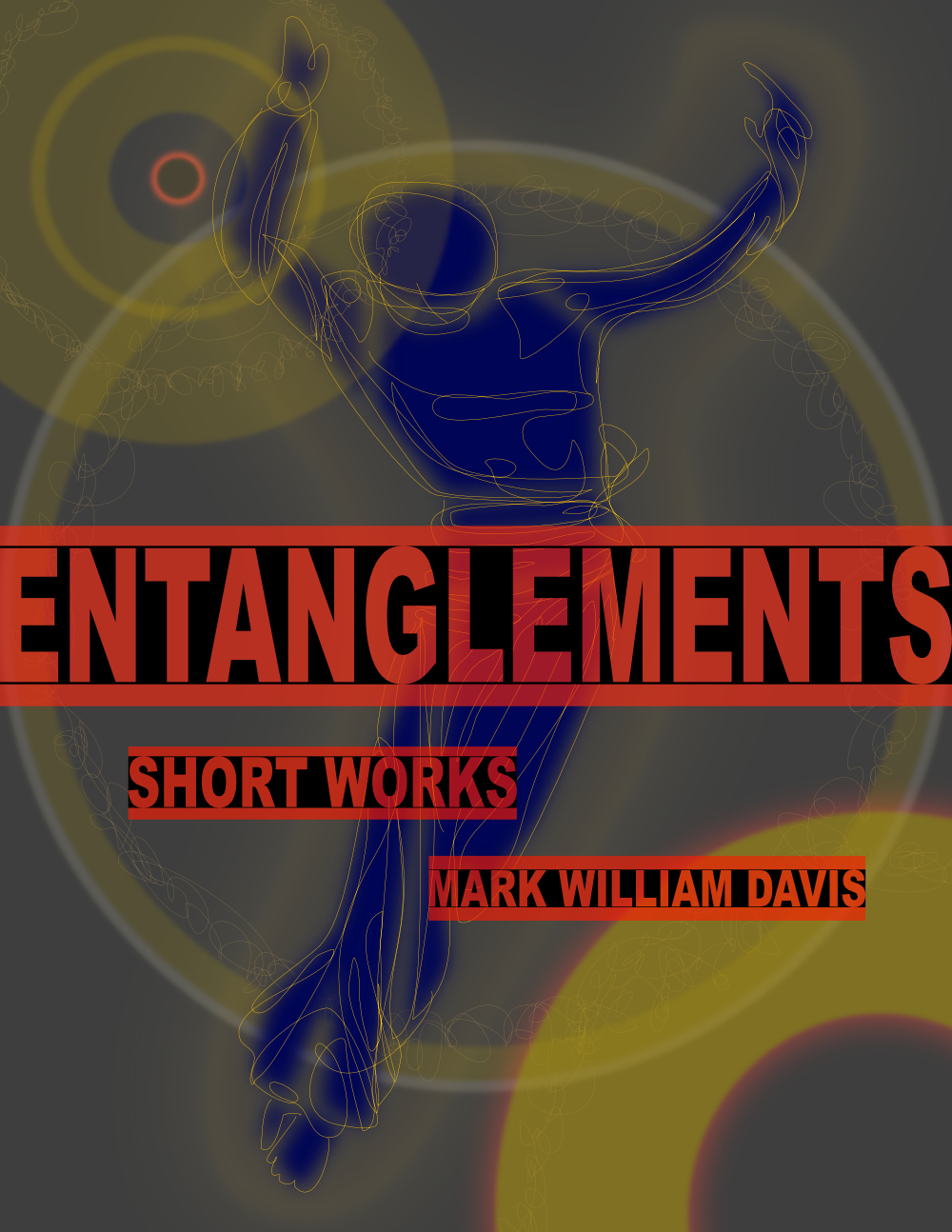
Entanglements: Collected Short Works

Now available in Kindle, softcover, and hardcover versions, Entanglements assembles a decade of short works by author, scientist, entrepreneur, and inventor Mark William Davis.

The fiction includes an intimate experimental triptych on the evolution of sexual identities. A genre-defying poetic meditation on creativity and environmental holocaust competes with conventional science fiction about quantum consciousness and virtual worlds. A postmodern interrogation of the intersection of storytelling and film rounds out the collected works as a counterpoint to an introductory dive into the ethics of altruism.

The nonfiction is divided into topics ranging from literary theory to philosophical concerns of religion, science, and artificial intelligence. Legal theories are magnified to examine the meaning of liberty and autonomy. A qualitative mathematics of free will is developed over the course of two essays and contextualized as part of the algorithm of evolution. What meaning really amounts to is always a central concern, whether discussing politics, culture, or ideas.

The works show the author’s own evolution in his thinking of our entanglement with reality as driven by underlying metaphors that transect science, reason, and society. For Davis, metaphors and the constellations of words that help frame them are the raw materials of thought, and their evolution and refinement is the central narrative of our growth as individuals in a webwork of societies and systems.

Entanglements is for readers who are in love with ideas and the networks of language that support and enervate them. It is a metalinguistic swim along a polychromatic reef of thought where fiction and nonfictional analysis coexist like coral and fish in a greater ecosystem.

Mark William Davis is the author of three dozen scientific papers and patents in cognitive science, search, machine translation, and even the structure of art.… Read the rest

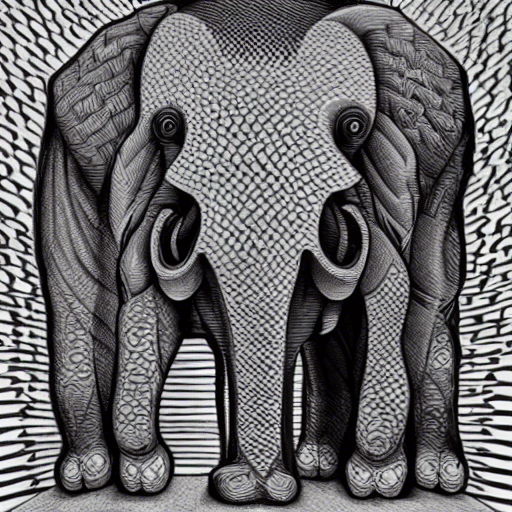
A Mammoth Undertaking: Interviewing the Future of Art

The following is my interview of DeepAI and Stable Diffusion running on an AMD Ryzen with NVIDIA GeForce RTX 3090.

Thank you for taking the time to discuss this important and interesting topic. Why are mammoths so important to the art world?

That the mammoths were domesticated before the start of the human era seems implausible from a historical perspective. In fact the majority of mammoths that people find in museums, libraries, and other collections are not domesticated mammoths. This suggests there might have been a greater need for mammoths within culture than before. This would make sense, considering that Neanderthals likely hunted other types of other species before settling in our world more than 400 years ago. Because they were not domesticated, they were only adapted to hunting rodents and other plant and animal species that were less domesticated in their wild form such as rabbits, snakes, etc.

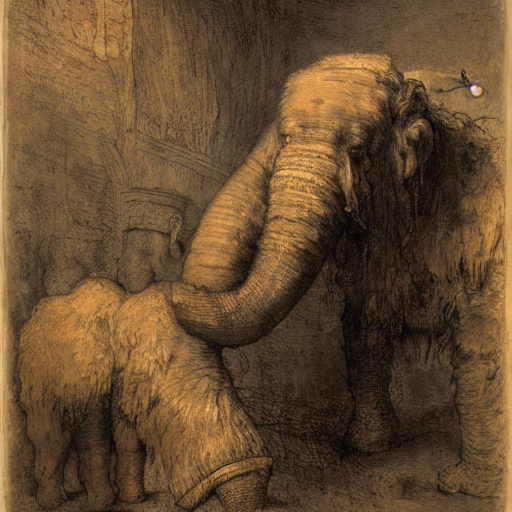
Starting at the earliest part of your collection, the mammoth is an unusual theme for Rembrandt, isn’t it?

It’s hard to believe that after all the success of their latest work, The Lord’s Prayer doesn’t want to let their “biggest hit yet”, the classic The Lord’s Prayer, disappear. The actor’s latest film, The Wrestler (via Warner Bros., which produces on their own, and in the U.K.), has garnered more than 15 million views on Amazon Instant Video (the company’s preferred store for Netflix-wielding subscribers, not the usual suspects Google Video), and has become so popular that when the film premiered at the Venice Film Festival, it was deemed the top film at the fest. The star-studded line-up has included the likes of Peter Lorre, Michael J Freberg, Colin Farrell, and Peter Sellers (both of whom made it to a Hollywood winery).… Read the rest

Critical Surveillance in the Showman State

I’ve been watching the steady stream of citizen-captured videos of bad actors in our little democracy. From racist police murders, to super-Karens, to anti-Antifa gun toters exercising intimidation, the mobile phone capture is revealing—and the internet is amplifying—the angry and ugly aspects of society that were once just local phenomena. Traditional media could promote them, but only when the events fit the channel restrictions on content, time, relevance, and taste. Now the channels are constantly expanding and the nascent ugliness is too.

Positive effects of this newfound awareness include policy changes like the requirements of body cameras for police, though some have argued that such videos violate the privacy of the subjects of police enforcement as often as they mitigate illegal behavior on the part of the police. Still, there is no going back. I purchased Google Glass during the beta period and experimented with the unit. I still own it and it still boots up. When they first came out there were reports of violent actions by people who were unhappy being subject to potentially always-on video recording. Now we have “Hey Siri, I’m being pulled over” audio triggers that are designed to enhance one’s recourse in the event of police misbehavior. Meanwhile, drones and license plate scanners by private companies can be subscribed to by police to be able to locate cars anywhere in metro areas quickly and efficiently, while at the same time the legality of attached GPS transponders for tracking suspects is constantly under judicial scrutiny. And facial recognition systems are racially biased, resulting in false-positive arrests of racial minorities (and likely others, too).

There is an entire field of Continental Philosophy that derives from Marxist theory and that goes by the title “critical theory.”… Read the rest

Bolt, Volt, and Tesla: The Experience and Ethics of Electrified Transportation

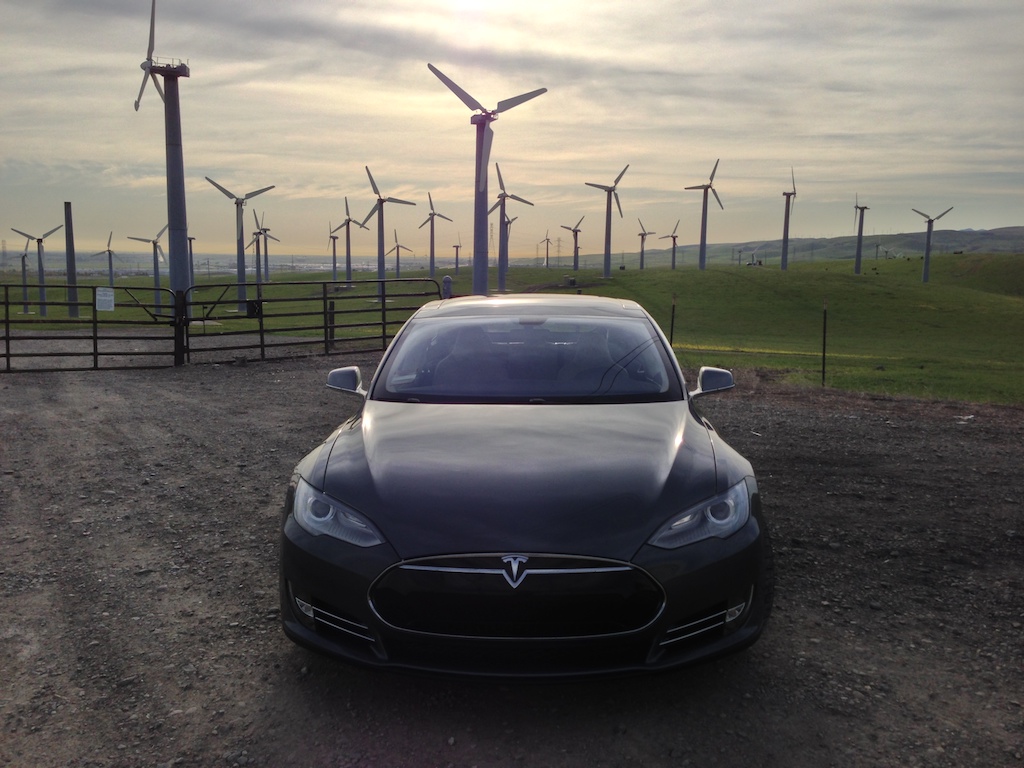
I have now owned a triumvirate of electric/hybrid vehicles since 2012. The quest began with a Chevy Volt in 2012 that we still own but that is used by our son in college. I recently worked with him to replace tires and windshield wipers on the vehicle, which is otherwise still rolling along despite a mild fender bender when he slid into another vehicle on a snowy night. The Bolt is the newest member of the grouping, serving as my wife’s daily driver but only accumulating 1500 miles since arriving via flatbed last October. And then there are the Teslas. The first, a Model S P85, was around number 4000 off the Fremont assembly line in early 2013, with the second taking its place in early 2016.

So has it been worth it? Yes, absolutely, but with caveats, operationally and ethically, as you will see.

First, the vehicles have been paired with photovoltaic systems, a 10kW system with microinverters in Cali and now an 8kW system at our remodeled southwestern abode. This helps to offset any concerns that grid electricity may be less clean than modern, high-efficiency gasoline engines.

Second, there is range anxiety. As the name implies, it’s the fear of running out of charge that is just like running out of gas but with far fewer places to recharge than are available in the modern ecosystem of gas stations throughout the nation. Mostly, when doing everyday errand-running and brief trips out of town, range anxiety is not an issue. Freeways are manageable in the Tesla now that superchargers are available for large swaths of the United States, including recent arrivals near the relatively desolate area where I now live.… Read the rest

New Agile Governance

John Dickerson, in his excellent Atlantic article, The Presidency: The Hardest Job in the World, combines historical analysis with quotes and insights from presidents and past advisers to develop both a critique of the expectations of the role of president and how to achieve better results. The analysis lands on a few recommendations including improving the on-boarding process for new presidents and simplifying the role itself. Having and trusting one’s cabinet leads to better delegation of the impossible responsibilities of the role. Maybe outsourcing the ceremonial aspects of the job to the VP or First Lady would allow the president to concentrate on policymaking and national security flare ups.

While all are reasonable suggestions, resetting expectations about the role of the executive branch should be balanced against reforming the legislative branch in parallel. If both are to be empowered to serve the public’s will with grace and intellect, they face concomitant challenges in overcoming the partisanship and influences of monied interests that have made them unresponsive to the people. Polls show that the public wants reduced health care costs, reasonable gun regulations, humane immigration policies, and an opening of rights for gays and marijuana consumers. But none of these are delivered because they are too complex or politically toxic for Congress to successfully navigate.

Maybe the methodology is wrong. Not in the sense of the Constitution being wrong or in need of updating, but in the sense of how decision making and information gathering is managed through the legislative and executive branches. I’d like to propose an alternative that I will label New Agile Governance (NAG) for simplicity. NAG is based on the simple idea that tracks what Dickerson attributes to H.R.… Read the rest