Entanglements: Collected Short Works

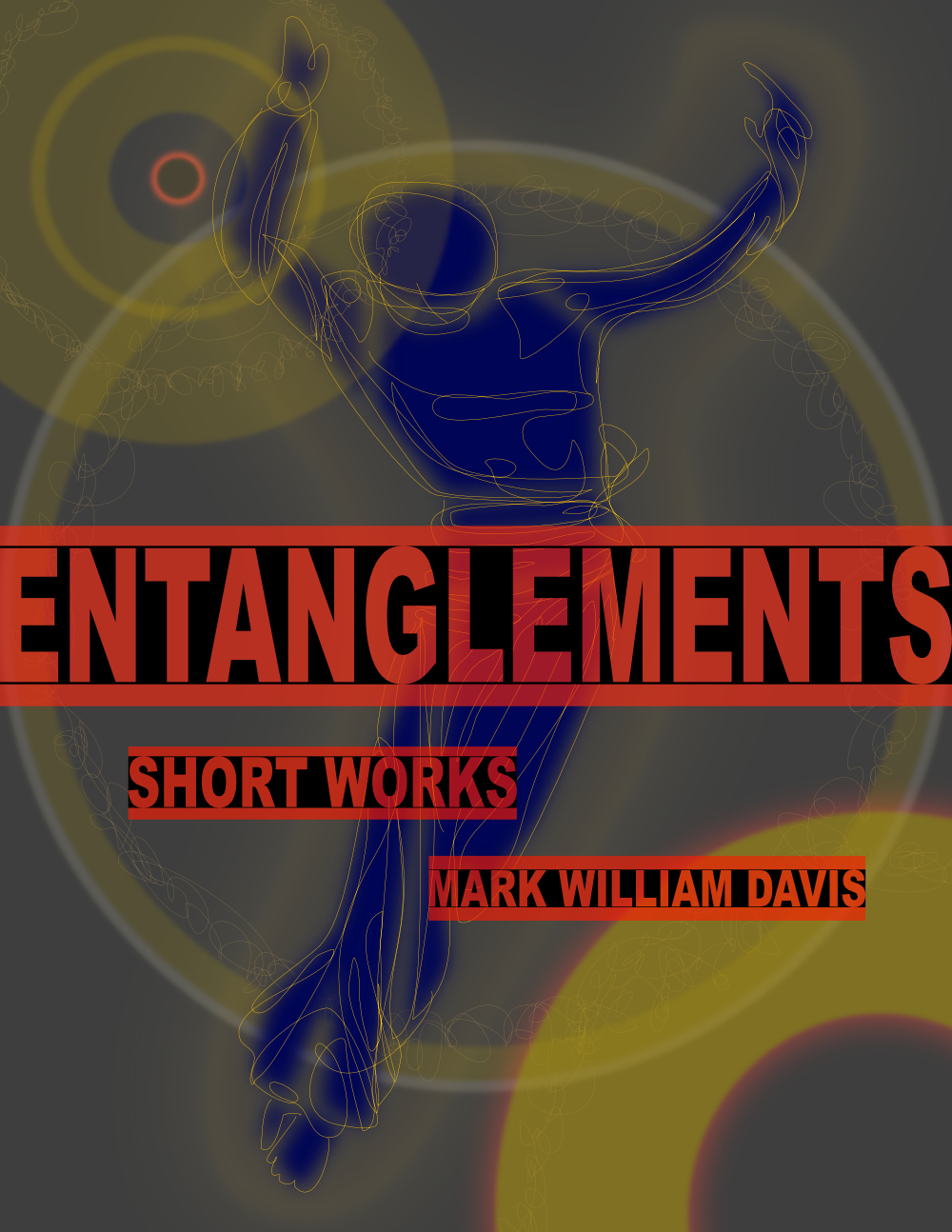
Now available in Kindle, softcover, and hardcover versions, Entanglements assembles a decade of short works by author, scientist, entrepreneur, and inventor Mark William Davis.

The fiction includes an intimate experimental triptych on the evolution of sexual identities. A genre-defying poetic meditation on creativity and environmental holocaust competes with conventional science fiction about quantum consciousness and virtual worlds. A postmodern interrogation of the intersection of storytelling and film rounds out the collected works as a counterpoint to an introductory dive into the ethics of altruism.

The nonfiction is divided into topics ranging from literary theory to philosophical concerns of religion, science, and artificial intelligence. Legal theories are magnified to examine the meaning of liberty and autonomy. A qualitative mathematics of free will is developed over the course of two essays and contextualized as part of the algorithm of evolution. What meaning really amounts to is always a central concern, whether discussing politics, culture, or ideas.

The works show the author’s own evolution in his thinking of our entanglement with reality as driven by underlying metaphors that transect science, reason, and society. For Davis, metaphors and the constellations of words that help frame them are the raw materials of thought, and their evolution and refinement is the central narrative of our growth as individuals in a webwork of societies and systems.

Entanglements is for readers who are in love with ideas and the networks of language that support and enervate them. It is a metalinguistic swim along a polychromatic reef of thought where fiction and nonfictional analysis coexist like coral and fish in a greater ecosystem.

Mark William Davis is the author of three dozen scientific papers and patents in cognitive science, search, machine translation, and even the structure of art.… Read the rest

Sentience is Physical, Part 2

Having recently moved to downtown Portland within spitting distance of Powell’s Books, I had to wander through the bookstore despite my preference for digital books these days. Digital books are easily transported, can be instantly purchased, and can be effortlessly carried in bulk. More, apps like Kindle Reader synchronize across platforms allowing me to read wherever and whenever I want without interruption. But is there a discovery feature to the shopping experience that is missing in the digital universe? I had to find out and hit the poetry and Western Philosophy sections at Powell’s as an experiment. And I did end up with new discoveries that I took home in physical form (I see it as rude to shop brick-and-mortar and then order via Amazon/Kindle), including a Borges poetry compilation and an unexpected little volume, The Body in the Mind, from 1987 by the then-head of University of Oregon’s philosophy department, Mark Johnson.

A physical book seemed apropos of the topic of the second book that focuses on the role of our physical bodies and experiences as central to the construction of meaning. Did our physical evolution and the associated requirements for survival also translate into a shaping of how our minds work? Psychologists and biologists would be surprised that there is any puzzlement over this likelihood, but Johnson is working against the backdrop of analytical philosophy that puts propositional structure as the backbone of linguistic productions and the reasoning that drives them. Mind is disconnected from body in this tradition, and subjects like metaphors are often considered “noncognitive,” which is the negation of something like “reasoned through propositional logic.”

But how do we convert these varied metaphorical concepts derived from physicality into something structured that we can reason about using effective procedures?… Read the rest

Sentience is Physical

Sentience is all the rage these days. With large language models (LLMs) based on deep learning neural networks, question-answering behavior of these systems takes on curious approximations to talking with a smart person. Recently a member of Google’s AI team was fired after declaring one of their systems sentient. His offense? Violating public disclosure rules. I and many others who have a firm understanding of how these systems work—by predicting next words from previous productions crossed with the question token stream—are quick to dismiss the claims of sentience. But what does sentience really amount to and how can we determine if a machine becomes sentient?

Note that there are those who differentiate sentience (able to have feelings), from sapience (able to have thoughts), and consciousness (some private, subjective phenomenal sense of self). I am willing to blend them together a bit since the topic here isn’t narrowly trying to address the ethics of animal treatment, for example, where the distinction can be useful.

First we have the “imitation game” Turing test-style approach to the question of how we might ever determine if a machine becomes sentient. If a remote machine can fool a human into believing it is a person, it must be as intelligent as a person and therefore sentient like we presume of people. But this is a limited goal line. If the interaction is only over a limited domain like solving your cable internet installation problems, we don’t think of that as a sentient machine. Even against a larger domain of open-ended question and answering, if the human doesn’t hit upon a revealing kind of error that a machine might make that a human would not, we remain unconvinced that the target is sentient.… Read the rest

Ancient Conceptual Code-Switching

I’ve been reading Hesiod as part of background research for a new book project I’m working on, tentatively titled Talos. In Talos, vulcanologists enter a strange artifact that floats to the surface of a lava dyke during a catastrophic eruption of Santorini. Inside is some kind of antique computing machine that operates using a strange fluid. The device is capable of manipulating people and time, in fact, and is used by the protagonists to harass one another, to explore history, and to change the future of the planet itself. And then it is gone again.

Hesiod represents some of the earliest works of the archaic period of ancient Greece. His Theogony is the early catalog of the Greek myths of Olympians and Titans. His Works and Days is perhaps the earliest discussion of Pandora, and it is not what most people know from Laura Croft and common parlance. In the Pandora myth, she is created by the “lame god” and blacksmith Hephaestus as a mechanism for avenging the release of the knowledge of fire to humankind by Prometheus. Why was fire a bad idea? Well, if humankind learned the ways of the gods they would just hang out and play video games, it seems:

The gods had hidden away the true means of livelihood for humankind, and they still keep it that way. If it were otherwise, it would be easy for you to do in just one day all the work you need to do, and have enough to last you a year, idle though you would be.

Perhaps we would have done a lot of sailing on the wine-dark seas. So people need punishing for the sympathetic crimes of Prometheus.… Read the rest

Wordle and the Hard Problem of Philosophy

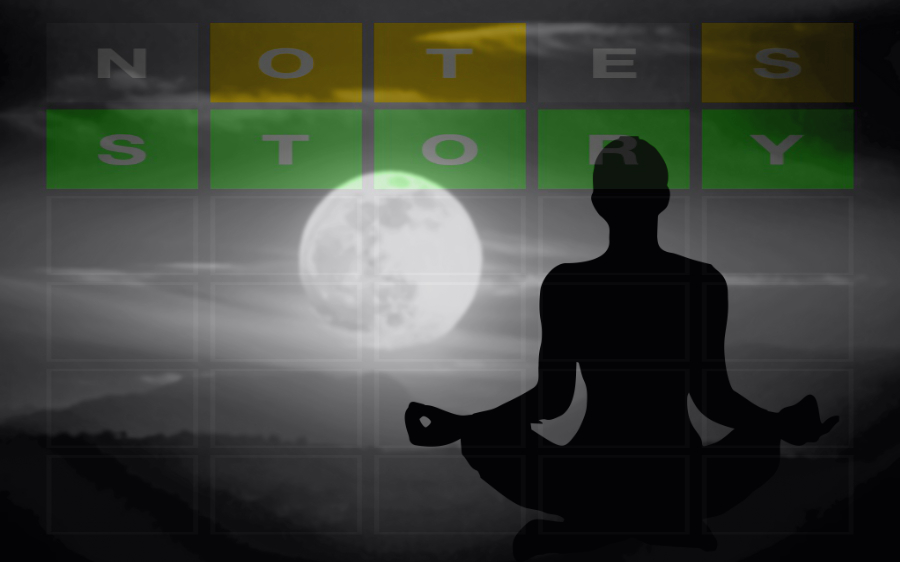
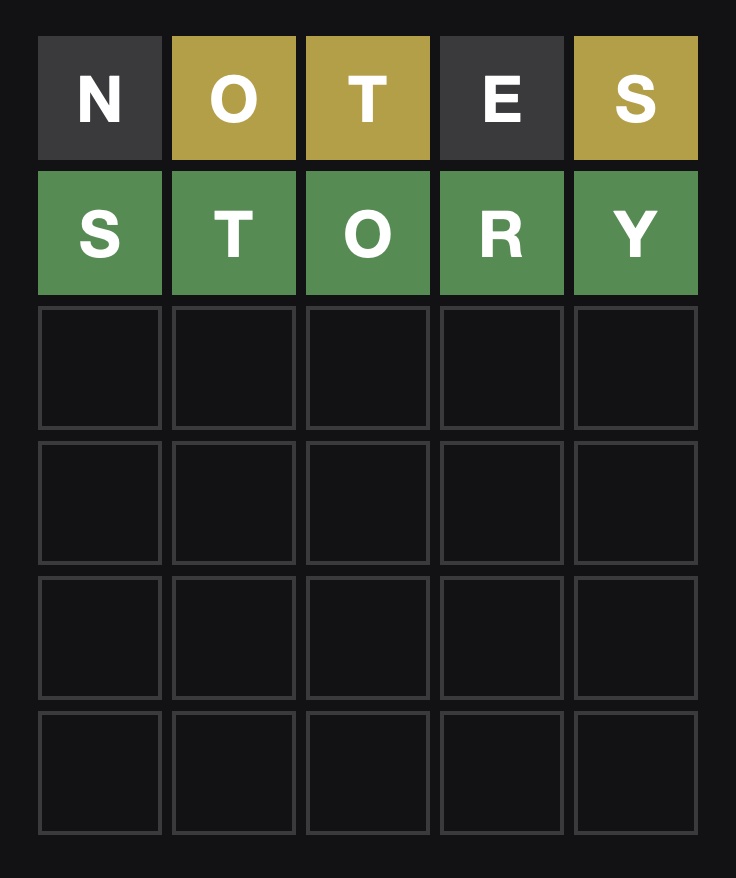
I occasionally do Wordles at the New York Times. If you are not familiar, the game is very simple. You have six chances to guess a five-letter word. When you make a guess, letters that are in the correct position turn green. Letters that are in the word but in the wrong position turn yellow. The mental process for solving them is best optimized by choosing a word initially that has high-frequency English letters, like “notes,” and then proceeding from there. At some point in the guessing process, one is confronted with anchoring known letters and trying to remember words that might fit the sequence. There is a handy virtual keyboard displayed below the word matrix that shows you the letters in black, yellow, green, and gray that you have tried, that are required, that are fit to position, and that remain untested, respectively. After a bit, you start to apply little algorithms and exclusionary rules to the process: What if I anchor an S at the beginning? There are no five-letter words that end in “yi” in English, etc. There is a feeling of working through these mental strategies and even a feeling of green and yellow as signposts along the way.

I decided this morning to write the simplest one-line Wordle helper I could and solved the puzzle in two guesses:

Sorry for the spoiler if you haven’t gotten to it yet! Here’s what I needed to do the job: a five letter word list for English and a word frequency list for English. I could have derived the first from the second but found the first first, here. The second required I log into Kaggle to get a good CSV searchable list.… Read the rest