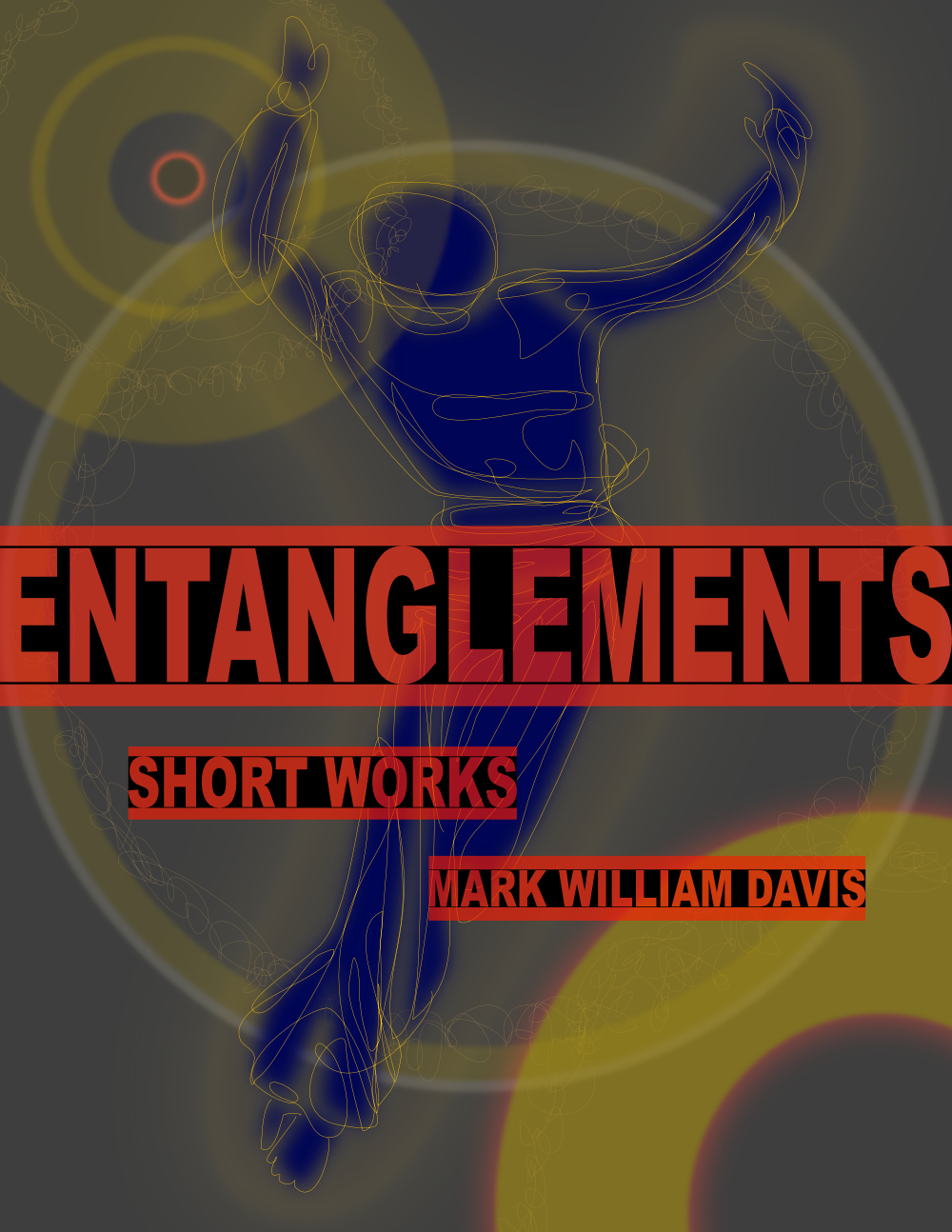
 Now available in Kindle, softcover, and hardcover versions, Entanglements assembles a decade of short works by author, scientist, entrepreneur, and inventor Mark William Davis.
The fiction includes an intimate experimental triptych on the evolution of sexual identities. A genre-defying poetic meditation on creativity and environmental holocaust competes with conventional science fiction about quantum consciousness and virtual worlds. A postmodern interrogation of the intersection of storytelling and film rounds out the collected works as a counterpoint to an introductory dive into the ethics of altruism.
The nonfiction is divided into topics ranging from literary theory to philosophical concerns of religion, science, and artificial intelligence. Legal theories are magnified to examine the meaning of liberty and autonomy. A qualitative mathematics of free will is developed over the course of two essays and contextualized as part of the algorithm of evolution. What meaning really amounts to is always a central concern, whether discussing politics, culture, or ideas.
The works show the author’s own evolution in his thinking of our entanglement with reality as driven by underlying metaphors that transect science, reason, and society. For Davis, metaphors and the constellations of words that help frame them are the raw materials of thought, and their evolution and refinement is the central narrative of our growth as individuals in a webwork of societies and systems.
Entanglements is for readers who are in love with ideas and the networks of language that support and enervate them. It is a metalinguistic swim along a polychromatic reef of thought where fiction and nonfictional analysis coexist like coral and fish in a greater ecosystem.
Mark William Davis is the author of three dozen scientific papers and patents in cognitive science, search, machine translation, and even the structure of art.… Read the rest