Oh, the Humanities!

I often laugh out loud at Ross Douthat’s New York Times columns that worry over strange spiritualisms taking over America, or try to unravel cultural knots that he always suggests might best be resolved by Catholicism (or even one of those lesser faiths), but I did enjoy his take today on the perishing of the humanities in America’s universities and colleges. I routinely read into the 18th and 19th centuries as an exploration of how language was once used. I read analytically, that is. Plots are picked apart. Characterization is considered. Clausal embedding is almost always more ornate than contemporary writing where such elaborations are pretentious or, at least, overwrought. I also (try to) read original versions of Balzac or Flaubert as an exercise in improving my French. What is less interesting to me are the class conflicts, racism, and gender roles from those bygone days. People are rotten enough today; I hardly need a reminder that we were always rotten and had reinforcing institutions and traditions overlaying that malaise.

But is there a threat to a decline in the participation in the humanities and a shift to STEM fields among university students? The argument is that it impacts our understanding of history and the drivers that got us here today. Perhaps it also diminishes our knowledge of logic and reason when philosophy is subtracted from the curriculum. Or just that the student never learns to articulate complex ideas and arguments.

An alternative to Douthat’s calls for monastic recitation and memorization as a grounding for the transmission of ideas is to make it more relevant to the STEM fields that have money and mindshare. In other words, inveigle the humanities into STEM; don’t fight, infiltrate.… Read the rest

Vaguely Effective Altruism

In “Killing John Galt” in my new collection, Entanglements, the first-person narrator muses that:

Reaching the moon was easy but conquering poverty was impossible. Watching Sonya’s animated hopefulness—perfection!—almost made me want to call Winborn and recommend that he just pay more taxes with the same money. Let the organizations and bureaucrats build institutions that could chisel away at the edifice, slowly and steadily; look at giant statistical outcomes to guide changes in policy over time. It would convert the problem from individual heroism into a technocratic game. I could play that game, running regression models and factor analytic comparisons to tease out what was and what was not working effectively. Social change then became policy management.

With the plunge of Effective Altruism (EA) from its hubristic trajectory across the sun of cryptocurrency, how and why to do good by wealthy people has become a renewed topic for discussion. At the New York Times, for instance, we have the regularly vague Ross Douthat complaining that if every oil magnate wants their money applied to just saving kids from malaria we would have fewer quaint state parks. Perhaps more interesting at the same publication is Ezra Klein’s discussion of the goals and limits of EA as well as the philosophical underpinnings of the movement. There is plenty of room for a spectrum of responses to the basic problem of how to give away money, but the key concept of “effectiveness” is what forces EA and EA-adjacent proponents to analyze their approaches and goals towards making the world a better place. Historically, much large-scale giving was intended to create a legacy for the industrialist families (Carnegie-Mellon University, Rockefeller Foundation, … ahem, Sackler Institute and related organizations).… Read the rest

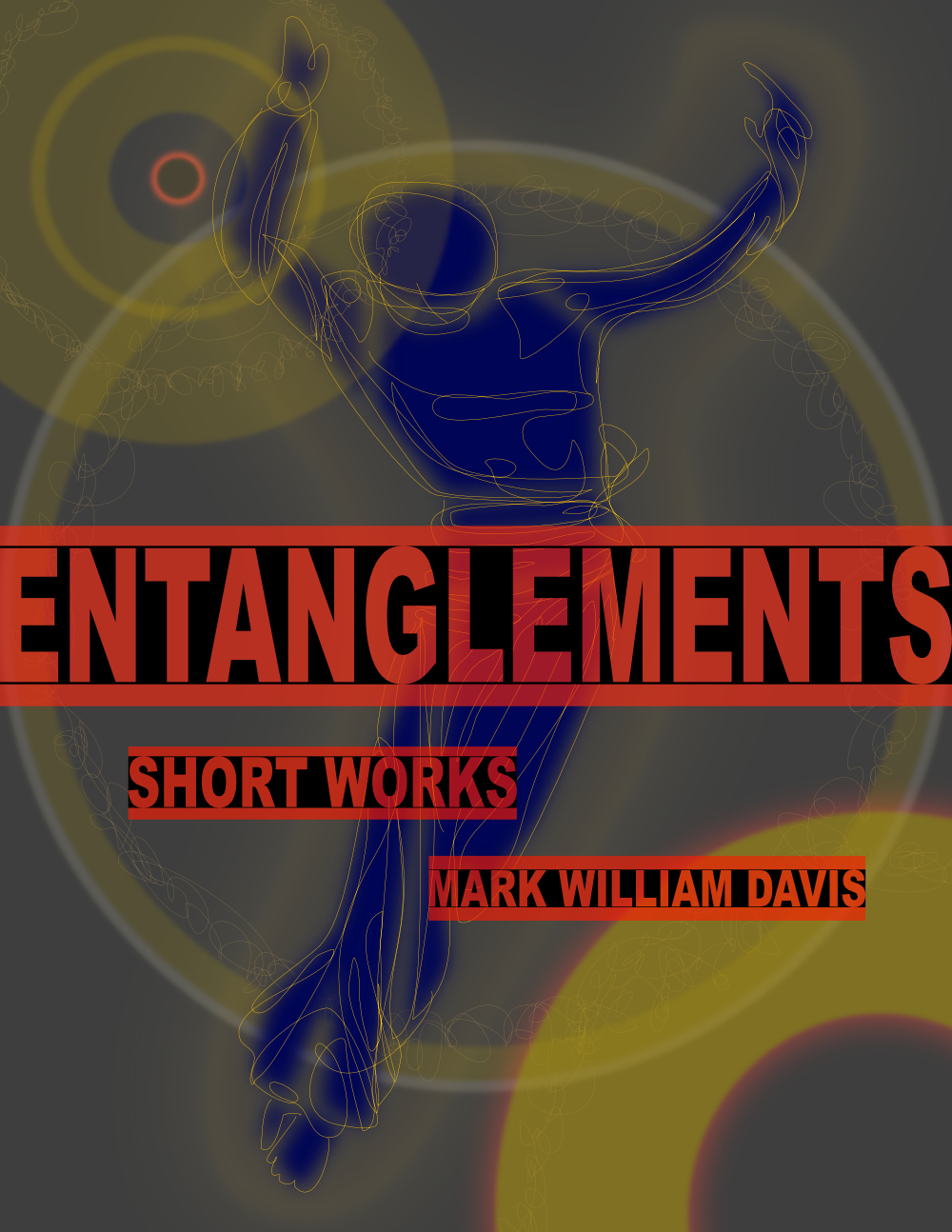
Entanglements: Collected Short Works

Now available in Kindle, softcover, and hardcover versions, Entanglements assembles a decade of short works by author, scientist, entrepreneur, and inventor Mark William Davis.

The fiction includes an intimate experimental triptych on the evolution of sexual identities. A genre-defying poetic meditation on creativity and environmental holocaust competes with conventional science fiction about quantum consciousness and virtual worlds. A postmodern interrogation of the intersection of storytelling and film rounds out the collected works as a counterpoint to an introductory dive into the ethics of altruism.

The nonfiction is divided into topics ranging from literary theory to philosophical concerns of religion, science, and artificial intelligence. Legal theories are magnified to examine the meaning of liberty and autonomy. A qualitative mathematics of free will is developed over the course of two essays and contextualized as part of the algorithm of evolution. What meaning really amounts to is always a central concern, whether discussing politics, culture, or ideas.

The works show the author’s own evolution in his thinking of our entanglement with reality as driven by underlying metaphors that transect science, reason, and society. For Davis, metaphors and the constellations of words that help frame them are the raw materials of thought, and their evolution and refinement is the central narrative of our growth as individuals in a webwork of societies and systems.

Entanglements is for readers who are in love with ideas and the networks of language that support and enervate them. It is a metalinguistic swim along a polychromatic reef of thought where fiction and nonfictional analysis coexist like coral and fish in a greater ecosystem.

Mark William Davis is the author of three dozen scientific papers and patents in cognitive science, search, machine translation, and even the structure of art.… Read the rest

Flooding the Mystery Zone with Cynicism

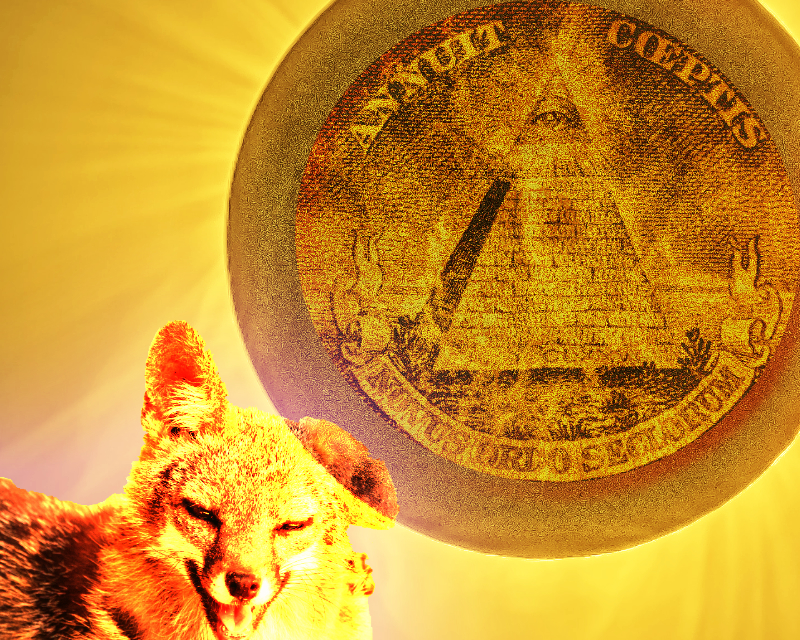
The Mystery of the FoxI just finished planting one of my two urban garden plots here in Southern New Mexico. The circles had been left unattended and later covered with weed-control fabric that I topped with rock a few years ago when I visited from our Arizona home and discovered a vexing and disturbing collection of items buried in the soil. There was a child’s ball, a partially melted white candle, some marbles, a variety of small bones and strange animal remains, indeterminate masses of red and brown, unusual feces, and large pork chop bones. A shrine to strange, ancient deities? The remains of an ancient civilization? Our security camera coverage and the gates and fencing ruled out human activity. So we were left with wild animals, specifically gray foxes with long bushy tails that appear integrated into our little downtown community. We see them on the cameras early in the morning hours, typically, and they do some rather odd things, so the notion that they were collecting interesting items and burying them did not seem unreasonable. We also observed one fox flipping a piece of torn paper plate in the air in front of an unimpressed cat crouching nearby. Foxes will sometimes do similar jumping behavior as a method for mesmerizing their prey, but why bury a melted candle? Perhaps it smelled just enough like food that the fox thought it might come in handy during lean times later. And the child’s toy ball? Plastic odors might also resemble food. Maybe.

The New Mexico foxes, skunks, raccoons, and, I’m informed, some formerly pet coatimundi that wander in the area (but we’ve never seen), as well as the javelina, coyotes, deer, bobcats, and foxes around our Arizona forest home, are certainly influential in my Tusker Long project that tries to tackle an alien world where the worker slave animals have broken from their chains of servitude and simplicity to dominate society and come to grips with their own limits, prejudices, and historical animosities (perfectly wrong word, that).… Read the rest