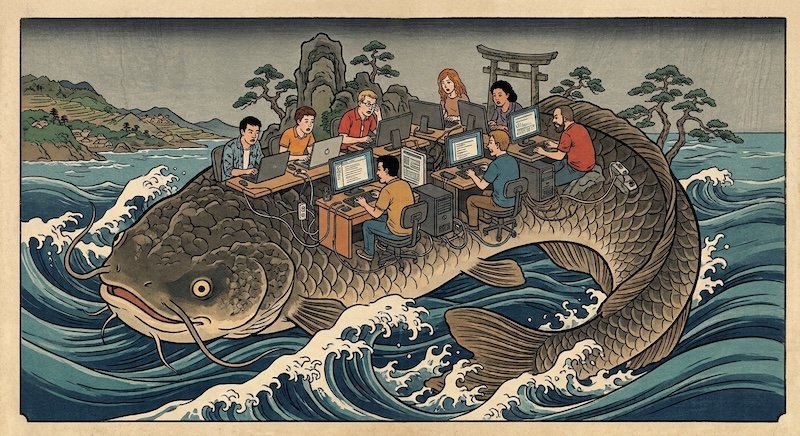
A Tsunami of Good Decisions


On a number of occasions, I have proposed the use of prediction markets for policy refinement and decisions, an idea that has long been studied in corporate and academic arenas. Unexpectedly, the startup set was busy turning the concept into just another gambling experience, rewarding influencers and insiders while fleecing the masses. But I want to revisit the idea in light of the mid-term “blue tsunami,” post “meteor-strike extinction event.” There are new opportunities to repair the damage of Trumpism as well as create policy structures to reestablish norms for government interaction.

First, populism and protectionism don’t solve problems, they exacerbate them and steamroll common sense. We see this in the broad use of tariffs and the inverted logic and emotional appeals that accompanied their application. Instead, this is a topic best left to technocrats finding solutions to political and economic problems, which means using tariffs in a narrow fashion to specifically address asymmetries in trade between nations. We are not going to correct Chinese industrial overcapacity by taxing Americans, for instance, but we can focus on those areas of trade imbalance that impact national security in a targeted fashion. Using tariffs to enhance industries like the automotive sector is fine on the surface, but it can also raise domestic product prices by eliminating or weakening competition. The technocrats can model all this and should offer politicians a collection of policy responses with well-articulated risk-reward matrixes.

There are a clutch of political meta-theories that are conjoined as epistemic democracy and that focus on how knowledge and information flow into democratic decision making. A fundamental question is how to choose who should do the governing in terms of solving problems of thriving?… Read the rest

Cybernetics and the Banality of Narcissism

The unalloyed stupidity of reckless tariffing and threats by the Trump administration against trading partners and allies around the world is baffling and deeply concerning. Even when a serious economist admits that tariffs can play a role in helping onshore manufacturing, they also slam the uncertainty that Trump’s mercurial behavior imposes on the world economy. Then there is the childish lashing out at universities, law firms, and perceived enemies like the former director of the US Cybersecurity and Infrastructure Security Agency who contradicted Trump in 2020 on election fraud. Next we have the cruelty of rapid and wrong deportations and visa revocations based on alleged allegiances; freedom is no longer guaranteed for visitors and guests in our country. And then there are the oxymoronic efforts at efficiency in governance that involve no efforts whatsoever to identify how exactly to make our government more efficient.

This is the banality of narcissism aided by incompetence.

But, mercifully, the counter-currents that are pushing the country away from an economic catastrophe demonstrate the self-correcting nature of complex systems. The term “cybernetics” comes from the Ancient Greek term for the steersman of a boat. It was used by the French polymath Ampère in a volume dedicated to the structure of human knowledge where it referred to the science of governance. Ah, the Age of Enlightenment, when some hoped that through careful thought ideas like economics, government, and international relations could be improved. If only David Ricardo were here today to discuss his theory of comparative advantage with America’s leadership. Governance was in mind when Norbert Wiener invented the theory of cybernetics as a mathematical approach to system control where feedback signals steer the system towards stable patterns of operation.… Read the rest