Consciousness as Functional Information


Congratulations to Anil Seth for winning the Berggruen essay prize on consciousness!  I didn’t learn the outcome until I emerged from one of the rare cellular blackout zones in modern America. My wife and I were whale watching south of Yachats (“ya-hots”) on the Oregon coast in this week of remarkable weather. We came up bupkis, nada, nil for the great migratory grays, but saw seals and sea lions bobbing in the surf, red shouldered hawks, and one bald eagle glowering like a luminescent gargoyle atop a Sitka spruce near Highway 101. We turned around at the dune groupings by Florence (Frank Herbert’s inspirations for Dune, weirdly enough, where thinking machines have been banned) and headed north again, the intestinal windings of the roads causing us to swap our sunglasses in and out in synchrony with the center console of the car as it tried to understand the intermittent shadows.

Seth is always reliable and his essay continues themes he has recently written about. There is a broad distrust of computational functionalism and hints of alternative models for how consciousness might arise in uniquely biological ways like his example of how certain neurons might fire purely for regulatory reasons. There are unanswered questions about whether LLMs can become conscious that hint at the challenges such ideas have, and the moral consequences that manifold conscious machines entail. He even briefly dives into the Simulation Hypothesis and its consequences for the possibility of consciousness.

I’ve included my own entry, below. It is both boldly radical and also fairly mundane. I argue that functionalism has a deeper meaning in biological systems than as a mere analog of computation. A missing component of philosophical arguments about function and consciousness is found in the way evolution operates in exquisite detail, from the role of parasitism to hidden estrus, and from parental investment to ethical consequentialism.… Read the rest

Red Queens of Hearts

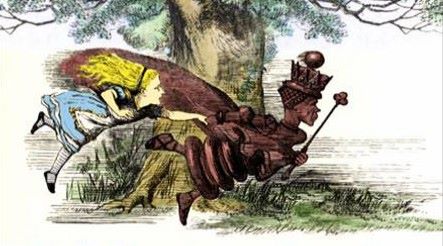
redqueenAn incomplete area of study in philosophy and science is the hows and whys of social cooperation. We can easily assume that social organisms gain benefits in terms of the propagation of genes by speculating about the consequences of social interactions versus individual ones, but translating that speculation into deep insights has remained a continuing research program. The consequences couldn’t be more significant because we immediately gain traction on the Naturalistic Fallacy and build a bridge towards a clearer understanding of human motivation in arguing for a type of Moral Naturalism that embodies much of the best we know and hope for from human history.

So worth tracking are continued efforts to understand how competition can be outdone by cooperation in the most elementary and mathematical sense. The superlatively named Freeman Dyson (who doesn’t want to be a free man?) cast a cloud of doubt on the ability of cooperation to be a working strategy when he and colleague William Press analyzed the payoff matrixes of iterated prisoner’s dilemma games and discovered a class of play strategies called “Zero-Determinant” strategies that always pay-off regardless of the opponent’s strategies. Hence, the concern that there is a large corner in the adaptive topology where strong-arming always wins. And evolutionary search must seek out that corner and winners must accumulate there, thus ruling out cooperation as a prominent feature of evolutionary success.

But that can’t reflect the reality we think we see, where cooperation in primates and other eusocial organisms seems to be the precursor to the kinds of virtues that are reflected in moral, religious, and ethical traditions. So what might be missing in this analysis? Christophe Adami and Arend Hintze at Michigan State may have some of the answers in their paper, Evolutionary instability of zero-determinant strategies demonstrates that winning is not everything.… Read the rest