Algorithmic Aesthetics

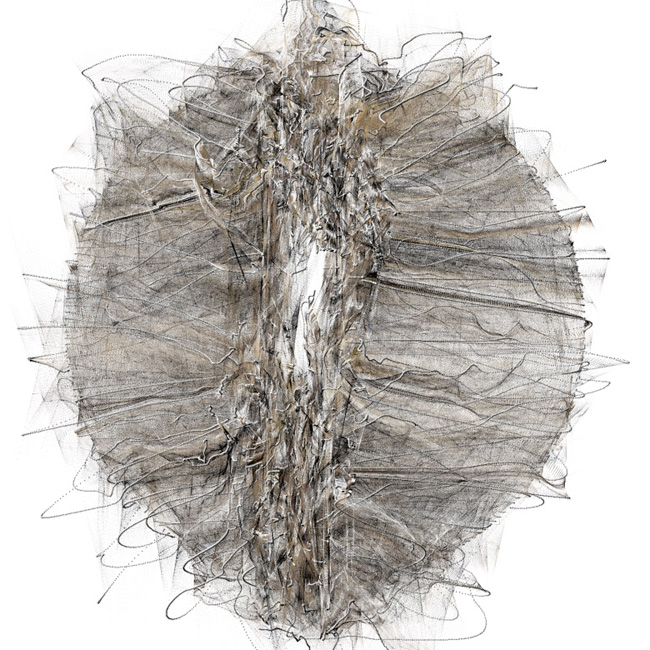
Jared Tarbell’s work in algorithmic composition via processing.org continues to amaze me. See more, here. The relatively compact descriptions of complex landscapes lend themselves to treatment as aesthetic phenomena where the scale of the grammars versus the complexity of the results asks the question what is art and how does it relate to human neurosystems?


 … Read the rest

Substitutions, Permutations, and Economic Uncertainty

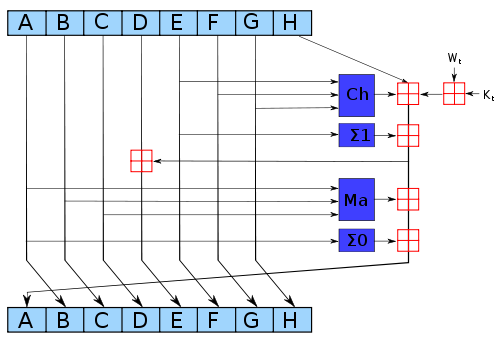
500px-SHA-2.svgWhen Robert Schiller was awarded the near-Nobel for economics there was also a tacit blessing that the limits of economics as a science were being recognized. You see, Schiller’s most important contributions included debunking the essentials of market behavior and replacing it with the irrationals of behavioral psychology.

Schiller’s pairing with Eugene Fama in the Nobel award is ironic in that Fama is the father of the efficient market hypothesis that suggests that rational behavior should overcome those irrational tendencies to reach a cybernetic homeostasis…if only the system were free of regulatory entanglements that drag on the clarity of the mass signals. And all these bubbles that grow and burst would be smoothed out of the economy.

But technological innovation can sometimes trump old school musings and analysis: BitCoin represents a bubble in value under the efficient market hypothesis because the currency value has no underlying factual basis. As the economist John Quinnen points out in The National Interest:

But in the case of Bitcoin, there is no source of value whatsoever. The computing power used to mine the Bitcoin is gone once the run has finished and cannot be reused for a more productive purpose. If Bitcoins cease to be accepted in payment for goods and services, their value will be precisely zero.

In fact, that specific computing power consists of just two basic functions: substitution and permutation. So some long string of transactions have all their bits substituted with other bits, then blocks of those bits are rotated and generally permuted until we end up with a bit signature that is of fixed length but that is statistically uncorrelated with the original content. And there is no other value to those specific (and hard to do) computations.… Read the rest

In Like Flynn

The exceptionally interesting James Flynn explains the cognitive history of the past century and what it means in terms of human intelligence in this TED talk:

What does the future hold? While we might decry the “twitch” generation and their inundation by social media, gaming stimulation, and instant interpersonal engagement, the slowing observed in the Flynn Effect might be getting ready for another ramp-up over the next 100 years.

Perhaps most intriguing is the discussion of the ability to think in terms of hypotheticals as a a core component of ethical reasoning. Ethics is about gaming outcomes and also about empathizing with others. The influence of media as a delivery mechanism for narratives about others emerged just as those changes in cognitive capabilities were beginning to mature in the 20th Century. Widespread media had a compounding effect on the core abstract thinking capacity, and with the expansion of smartphones and informational flow, we may only have a few generations to go before the necessary ingredients for good ethical reasoning are widespread even in hard-to-reach areas of the world.… Read the rest

Contingency and Irreducibility

JaredTarbell2Thomas Nagel returns to defend his doubt concerning the completeness—if not the efficacy—of materialism in the explanation of mental phenomena in the New York Times. He quickly lays out the possibilities:

  1. Consciousness is an easy product of neurophysiological processes
  2. Consciousness is an illusion
  3. Consciousness is a fluke side-effect of other processes
  4. Consciousness is a divine property supervened on the physical world

Nagel arrives at a conclusion that all four are incorrect and that a naturalistic explanation is possible that isn’t “merely” (1), but that is at least (1), yet something more. I previously commented on the argument, here, but the refinement of the specifications requires a more targeted response.

Let’s call Nagel’s new perspective Theory 1+ for simplicity. What form might 1+ take on? For Nagel, the notion seems to be a combination of Chalmers-style qualia combined with a deep appreciation for the contingencies that factor into the personal evolution of individual consciousness. The latter is certainly redundant in that individuality must be absolutely tied to personal experiences and narratives.

We might be able to get some traction on this concept by looking to biological evolution, though “ontogeny recapitulates phylogeny” is about as close as we can get to the topic because any kind of evolutionary psychology must be looking for patterns that reinforce the interpretation of basic aspects of cognitive evolution (sex, reproduction, etc.) rather than explore the more numinous aspects of conscious development. So we might instead look for parallel theories that focus on the uniqueness of outcomes, that reify the temporal evolution without reference to controlling biology, and we get to ideas like uncomputability as a backstop. More specifically, we can explore ideas like computational irreducibility to support the development of Nagel’s new theory; insofar as the environment lapses towards weak predictability, a consciousness that self-observes, regulates, and builds many complex models and metamodels is superior to those that do not.… Read the rest
Signals and Noise, Chapter 00000011 (Cavern)

cover-design-epubThe cavern of Zach’s room, his private space, is rarely invaded by his mother. He feels confidently, quietly isolated there, protected and enwombed as he reaches out through the broadband into the virtual caves of the web, into blogs, AetherFaces, AetherFaces, IRC chat rooms, web sites, and secure shells into compromised foreign computer systems. Visually, there is warmth to the space because of the dun shade over the compact fluorescents and the wall hangings in bands of color. Under pressure from a compact, oscillating fan, stellated icosahedrons in pocked metal and wood drift like interlopers to the solar system of the collections of plastic superheroes and creatures from horror movies perched along every available surface.

There was an era not long ago when a teen inordinately quiet, obsessively detailing balsa wood planes or role playing miniatures, would have been worried over by a parent from a generation before, whose parents were themselves worried that their own children were listening to radical hippie music, but Zach’s mom was too distracted by the pressures of her job as a marketing VP to be able to divert her energies to worrying over Zach. Zach was used to it. It rarely bothered him. He had his cave, school, self-determination and a private life. Her comings and goings were barely noticeable for weeks on end, though she often sent him tight, loving text messages reminding him of deadlines and updating AetherFaces with ecstatic praise and notes about her own complicated life. He was at the top of her to-do list, but just one more project in a cataract of them. Even his very existence was a project of sorts. Zach’s father was a sperm bank and he had been conceived out of a scheduling lull and nagging insecurity on his mother’s part that her biological clock was moving out of range of thoroughly healthy outcomes.… Read the rest

Death Comes for the Visionary

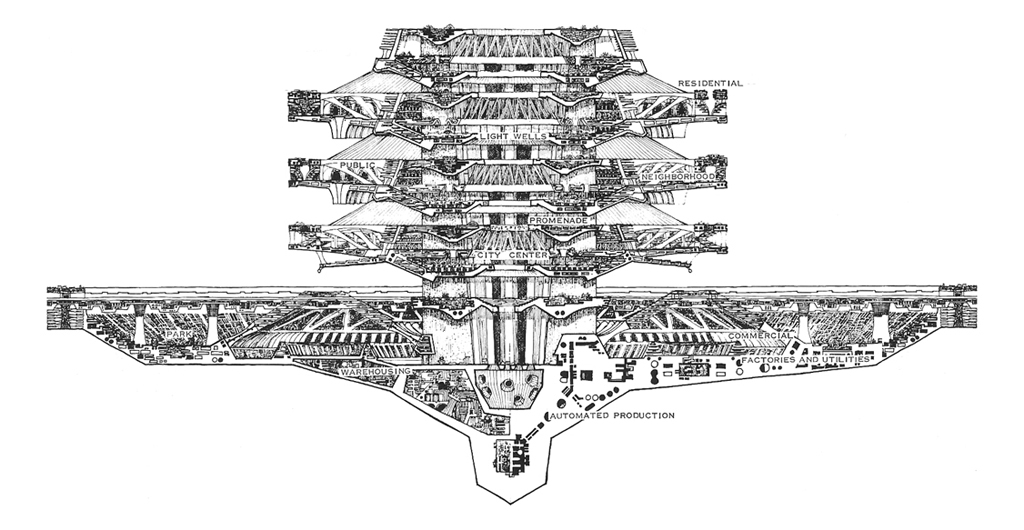
soleri_babelI sadly missed the announcement that Paolo Soleri died in April of this year. I’m happy that my family and I got to tour Arcosanti during his lifetime, of course, and I pledge to make no further negative comments about his writings during my lifetime, though I reserve the right to passing ambivalent mentions.

Long live Paolo Soleri!… Read the rest

Red Queens of Hearts

redqueenAn incomplete area of study in philosophy and science is the hows and whys of social cooperation. We can easily assume that social organisms gain benefits in terms of the propagation of genes by speculating about the consequences of social interactions versus individual ones, but translating that speculation into deep insights has remained a continuing research program. The consequences couldn’t be more significant because we immediately gain traction on the Naturalistic Fallacy and build a bridge towards a clearer understanding of human motivation in arguing for a type of Moral Naturalism that embodies much of the best we know and hope for from human history.

So worth tracking are continued efforts to understand how competition can be outdone by cooperation in the most elementary and mathematical sense. The superlatively named Freeman Dyson (who doesn’t want to be a free man?) cast a cloud of doubt on the ability of cooperation to be a working strategy when he and colleague William Press analyzed the payoff matrixes of iterated prisoner’s dilemma games and discovered a class of play strategies called “Zero-Determinant” strategies that always pay-off regardless of the opponent’s strategies. Hence, the concern that there is a large corner in the adaptive topology where strong-arming always wins. And evolutionary search must seek out that corner and winners must accumulate there, thus ruling out cooperation as a prominent feature of evolutionary success.

But that can’t reflect the reality we think we see, where cooperation in primates and other eusocial organisms seems to be the precursor to the kinds of virtues that are reflected in moral, religious, and ethical traditions. So what might be missing in this analysis? Christophe Adami and Arend Hintze at Michigan State may have some of the answers in their paper, Evolutionary instability of zero-determinant strategies demonstrates that winning is not everything.… Read the rest

Novelty in the Age of Criticism

Gary Cutting from Notre Dame and the New York Times knows how to incite an intellectual riot, as demonstrated by his most recent The Stone piece, Mozart vs. the Beatles. “High art” is superior to “low art” because of its “stunning intellectual and emotional complexity.” He sums up:

My argument is that this distinctively aesthetic value is of great importance in our lives and that works of high art achieve it much more fully than do works of popular art.

But what makes up these notions of complexity and distinctive aesthetic value? One might try to enumerate those values or create a list. Or, alternatively, one might instead claim that time serves as a sieve for the values that Cutting is claiming make one work of art superior to another, thus leaving open the possibility for the enumerated list approach to be incomplete but still a useful retrospective system of valuation.

I previously argued in a 1994 paper (published in 1997), Complexity Formalisms, Order and Disorder in the Structure of Art, that simplicity and random chaos exist in a careful balance in art that reflects our underlying grammatical systems that are used to predict the environment. And Jürgen Schmidhuber took the approach further by applying algorithmic information theory to novelty seeking behavior that leads, in turn, to aesthetically pleasing models. The reflection of this behavioral optimization in our sideline preoccupations emerges as art, with the ultimate causation machine of evolution driving the proximate consequences for men and women.

But let’s get back to the flaw I see in Cutting’s argument that, in turn, fits better with Schmidhuber’s approach: much of what is important in art is cultural novelty. Picasso is not aesthetically superior to the detailed hyper-reality of Dutch Masters, for instance, but is notable for his cultural deconstruction of the role of art as photography and reproduction took hold.… Read the rest

A, B, C time!

time-flows-awayThis might get technical, despite the vaguely Sesame Street quality to the title. You see, philosophers have long worried over time and causality, and rightly so, going back to the Greeks like Heraclitus and Parmenides, as well as their documenters many years later. Is time a series of events one after another or is that a perceptual mistake? For if everything comes from some cascade of events that precede it, it is illogical to presume that something might emerge from nothing (Parmenides). And, contra, perhaps all things are in a state of permanent change and all such perceptions are confused (Heraclitus). The latter has some opaque formulations in the appreciation of the Einsteinian relativistic form of combining space and time together while still preserving the symmetry of time in the basic equations, allowing for the rolling forward and backward of the space-time picture without much in the way of consequences.

So Lee Smolin’s re-injection of time as a real phenomena in Time Reborn takes us from A and B theories of time to something slightly new, which might be called a C theory. This theory builds on Smolin’s previous work where he proposed an evolutionary model of cosmology to explain how the precarious constants of our observed universe might have come into being. In Smolin’s super-cosmology, many universes come to be and not be at an alarming rate. Indeed, perhaps in every little black hole is another one. But many of these universes are not very viable because they lack the physical constants needed to last a long time and for entities like us to evolve to try to comprehend them. This does away with any mysteries about the Anthropic Principle: we are just survivors.… Read the rest

FICLO Forever

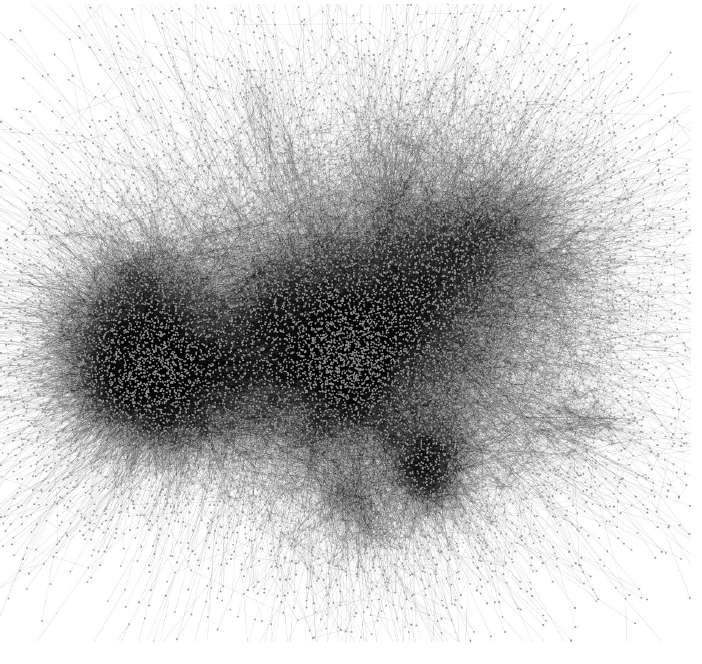
hairballEdward Snowden set off a maelstrom with his revelation concerning the covert use of phone records and possibly a greater range of information. For those of us in the Big Data technology universe, the technologies and algorithms involved are utterly prosaic: given the target of an investigation who is under scrutiny after court review, just query their known associates via a database of phone records. Slightly more interesting is to spread out in that connectivity network and identify associates of associates, or associates of associates who share common features. Still, it is a matching problem over small neighborhoods in large graphs, and that ain’t hard.

The technological simplicity of the system is not really at issue, though, other than to note that just as information wants to be free—and technology makes that easier than ever—private information seems to be increasingly easy to acquire, distribute, and mine. But let’s consider a policy fix to at least one of the ethical dilemmas that is posed by what Snowden revealed. We might characterize this by saying that the large-scale, covert acquisition and mining of citizen data by the US government violates the Fourth Amendment. Specifically, going back in the jurisprudence a bit, when we expect privacy and when there is no probable cause to violate that privacy, then the acquisition of that information violates our rights under the Fourth. That is the common meme that is floating around concerning Snowden’s revelations, though it is at odds with widespread sentiment that we may need to give up some rights of privacy to help fight terrorism.

I’m not going to argue here about the correctness of these contending constructs, however. Nor will I address the issue of whether Snowden should have faced the music, fled, or whether he simply violated a rule and an oath requiring secrecy.… Read the rest