Chinese Feudal Wasps

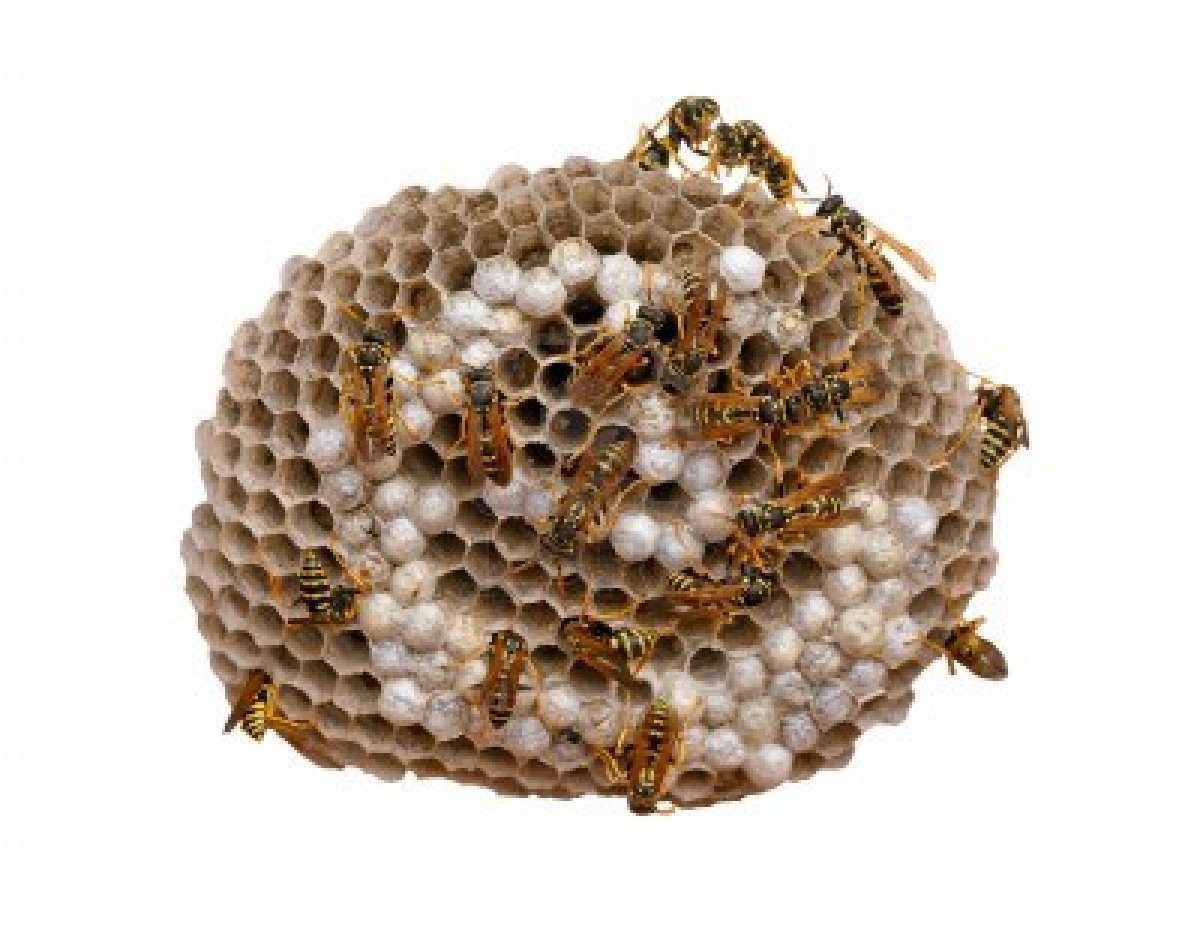
waspsIn Fukuyama’s The Origins of Political Order, the author points out that Chinese feudalism was not at all like European feudalism. In the latter, vassals were often unrelated to lords and the relationship between them was consensual and renewed annually. Only later did patriarchal lineages become important in preserving the line of descent among the lords. But that was not the case in China where extensive networks of blood relations dominated the lord-vassal relationship; the feudalism was more like tribalism and clans than the European model, but with Confucianism layered on top.

So when E.O. Wilson, still intellectually agile in his twilight years, describes the divide between kin selection and multi-level selection in the New York Times, we start to see a similar pattern of explanation for both models at far more basic level than just in the happenstances of Chinese versus European cultures. Kin selection predicts that genetic co-representation can lead an individual to self-sacrifice in an evolutionary sense (from loss of breeding possibilities in Hymenoptera like bees and ants, through to sacrificial behavior like standing watch against predators and thus becoming a target, too). This is the traditional explanation and the one that fits well for the Chinese model. But we also have the multi-level selection model that posits that selection operates at the group level, too. In kin selection there is no good explanation for the European feudal tradition unless the vassals are inbred with their lords, which seems unlikely in such a large, diverse cohort. Consolidating power among the lords and intermarrying practices possibly did result in inbreeding depression later on, but the overall model was one based on social ties that were not based on genetic familiarity.… Read the rest
Novelty and the Novel

stillsuitMy 14-year-old is obsessed with Frank Herbert’s Dune right now, marveling over the complexity and otherworldly ornamentation that Herbert imbued in his strange hyper-future (or past maybe, who knows). Dune might read as an allegory about Middle Eastern oil or about psychotropic drugs or nothing at all, but regardless of any deeper layers in its palimpsest,  it is so surprising to a first reader—especially a young one—that it still has the power to fuel daydreams (I obsessed over building a stillsuit at my son’s age, imagining being able to spend days in the harsh New Mexico summer without the need for water).

So it may be surprising that I found myself agreeing with Ian McEwan in The New Republic where he calls into doubt the validity of fiction, though ultimately he rediscovers his love of fiction in Nabakov’s “Caress [of the] divine details” and in John Updike’s controlled descriptions. He comes back again to fiction but not at the expense of wanting nonfiction that brings him new ideas. We are information harvesting machines and the novelty generation rate of nonfiction (there is always the history you do not know much less the cosmology you can’t understand) is just much greater than that of fiction.

But perhaps there is a détente in the middle where fiction and nonfiction commingle. The historical novel is perhaps the best example. The only fear being that the history is too much bent to the requirements of drama and conflict to be at all accurate. Likewise, there might be modern hard science fiction that provides an accurate and deep glimpse into the hermeneutics of real scientific research, and possible scientific futures. Then, at least, there is information beyond the craft of writing embedded within them.… Read the rest

A Paradigm of Guessing

boxesThe most interesting thing I’ve read this week comes from Jurgen Schmidhuber’s paper, Algorithmic Theories of Everything, which should be provocative enough to pique the most jaded of interests. And the quote is from way into the paper:

The first number is 2, the second is 4, the third is 6, the fourth is 8. What is the fifth? The correct answer is “250,” because the nth number is n 5 −5n^4 −15n^3 + 125n^2 −224n+ 120. In certain IQ tests, however, the answer “250” will not yield maximal score, because it does not seem to be the “simplest” answer consistent with the data (compare [73]). And physicists and others favor “simple” explanations of observations.

And this is the beginning and the end of logical positivism. How can we assign truth to inductive judgments without crossing from fact to value, and what should that value system be?… Read the rest

The Churches of Evil

The New York Times continues to mine the dark territory between religious belief and atheism in a series of articles in the opinion section, with the most recent being Gary Cutting’s thoughtful meditation on agnosticism, ways of knowing, and the contributions of religion to individual lives and society. In response, Penn Jillette and others discuss atheism as a religion-like venture.

We can dissect Cutting’s argument while still being generous to his overall thrust. It is certainly true that aside from the specific knowledge claims of religious people that there are traditions of practice that result in positive outcomes for religious folk. But when we drill into the knowledge dimension, Cutting props up Alvin Plantinga and Richard Swinburne as representing “the role of evidence and argument” in advanced religious argument. He might have been better to restrict the statement to “argument” in this case, because both philosophers focus primarily on argument in their philosophical works. So evidence remains elusively private in the eyes of the believer.

Interestingly, many of the arguments of both are simply arguments against a counter-assumption that anticipates a secular universe. For instance, Plantinga shows that the Logical Problem of Evil is not incoherent, resulting in a conclusion that evil (neglect “natural evil” for the moment) is not logically incompatible with omnibenevolence, omnipotence, and omniscience. But, and here we get back to Cutting, it does nothing to persuade us that the rapacious cruelty of Yahweh much less the moral evil expressed in the new concept of Hell in the New Testament are anything more than logically possible. The human dimension and the appropriate moral outrage are unabated and we loop back to the generosity of Cutting towards the religious: shouldn’t we provide equal generosity to the scriptural problem of evil as expressed in everything from the Hebrew Bible through to the Book of Mormon?… Read the rest

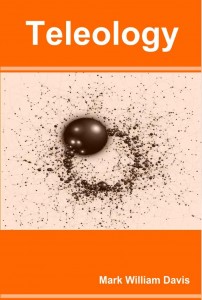
Teleology, Chapter 12

Everything is prediction. Compression is truth. Teleonomy is the new teleology. I’m working on wondermentation. It is of arguable utility to create pithy little epigrams and nonce phrases as markers to different phases of one’s life, but they began to accumulate as graduate school ground down towards a soft landing at Stanford. My studies and research started to get lively towards the end of my undergrad degree with an assistanceship in the Advanced Computing Laboratory. Machine learning and evolutionary computation were my favored areas of interest and I supported my core studies with evolutionary biology, ethology, analytic philosophy and mathematics.

I felt I had crossed a Rubicon late in my senior year at Cornell as I worked on a fundamental challenge in learning patterns directly from data—so-called unsupervised learning and knowledge acquisition. The problem posed as a kind of Manichaean mystery to me, divided between treating every single data point as a singularity and similarly considering them all as a unified whole. Between the two poles was compromise meted out by co-occurrence priorities; events close together in time and space deserved capture as a statistical regularity.

The threshold question was what form that acquisition algorithm could take on that would lead to an efficient coding of the data into a predictive model. The answer was found in an elliptical foray through the fundamentals of mathematics and computing, then straight into the heart of evolutionary thinking. I did not really emerge from it, either. There was a small eureka moment with a gradual fading of interest as summer hit and I was back in Santa Fe after graduating, waiting for my Masters program to kick-off. It stayed with me and I carried a small notebook around, feverishly scribbling notes while once again wandering up those arroyos towards the ruddy canyons above.… Read the rest

Ye Olde Leaden New Year

Fascinating discovery by Emily Chertoff at The Atlantic from the archives of The New York Times dating to 1856 about European traditions concerning New Year’s celebrations. Could all that molybdomancy have led to stupidity?

Update: New York Times changed the reference links to Emily Chertoff’s article. Here is the original:

New York Times PDFRead the rest

Industrial Revolution #4

Paul Krugman at New York Times consumes Robert Gordon’s analysis of economic growth and the role of technology and comes up more hopeful than Gordon. The kernel in Krugman’s hope is that Big Data analytics can provide a shortcut to intelligent machines by bypassing the requirement for specification and programming that was once assumed to be a requirement for artificial intelligence. Instead, we don’t specify but use “data-intensive ways” to achieve a better result. And we might get to IR#4, following Gordon’s taxonomy where IR stands for “industrial revolution.” IR#1 was steam and locomotives  IR#2 was everything up to computers. IR#3 is computers and cell phones and whatnot.

Krugman implies that IR#4 might spur the typical economic consequences of grand technological change, including the massive displacement of workers, but like in previous revolutions it is also assumed that economic growth built from new industries will ultimately eclipse the negatives. This is not new, of course. Robert Anton Wilson argued decades ago for the R.I.C.H. economy (Rising Income through Cybernetic Homeostasis). Wilson may have been on acid, but Krugman wasn’t yet tuned in, man. (A brief aside: the Krugman/Wilson notions probably break down over extraction and agribusiness/land rights issues. If labor is completely replaced by intelligent machines, the land and the ingredients it contains nevertheless remain a bottleneck for economic growth. Look at the global demand for copper and rare earth materials, for instance.)

But why the particular focus on Big Data technologies? Krugman’s hope teeters on the assumption that data-intensive algorithms possess a fundamentally different scale and capacity than human-engineered approaches. Having risen through the computational linguistics and AI community working on data-driven methods for approaching intelligence, I can certainly sympathize with the motivation, but there are really only modest results to report at this time.… Read the rest

Keep Suspicious and Carry On

I’ve previously argued that it is unlikely that resource-constrained simulations can achieve adequate levels of fidelity to be sufficient for what we observe around us. This argument was a combination of computational irreducibility and assumptions about the complexity of evolutionary trajectories of living beings. There may also be an argument about the observed contingency of the evolutionary process that is an argument against any kind of “intelligent” organizing principle though not against simulation itself.

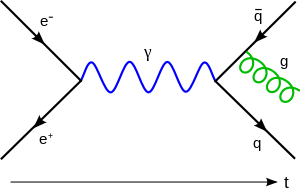
Leave it to physicists to envision a test of the Bostrom hypothesis that we are living in a computer simulation. Martin Savage and his colleagues look at Quantum Chromodynamic (QCD) theory and current simulation methods for QCD. They conclude that if we are, in fact, living in a simulation, then we might observe specific inconsistencies that arise from finite computing power for the universe as a whole. Those inconsistencies would be observed in looking at the distribution of cosmic ray energies, specifically. Note that if the distribution is not unusual the universe could either be a simulation (just a sophisticated one) or could be a truly physical one (free running and not on another entity’s computational framework). It is only if the distribution is unusual that it might be a simulation.… Read the rest

Bravery and Restraint

In 1997, shortly after getting married and buying our first house, I was invited to travel to Japan and spend a little over a month researching Japanese-Chinese machine translation under a grant from the Japanese Ministry of Education. It was a disorienting experience, like most non-Japanese find Japan, and the hours spent studying my translation guide helped me very little. In the mornings I would jog through downtown, around the canals, and past the temples. Days were spent writing and optimizing statistical matching algorithms for lining up runs of characters that I didn’t understand in an early incarnation of the same approach currently used in Google Translate.

I, of course, visited the Peace Memorial Park several times and toured the museum there, ultimately purchasing a slim volume of recollections from the day the bomb fell that was written in Japanese and English on facing pages. There was also one thing that struck me and I later inquired about to a Japan expert who worked in the Intelligence Community: the narrative presented in the museum was that the Japanese commoner had little understanding of the war effort; they were victims of the emperor and the elite classes. It was a moral distancing that resonated with similar arguments about the German volk being non-complicit in the Holocaust, and an argument that I found distasteful.

With this background, then, I was intrigued when I discovered that the father of my new boss wrote a memoir on being perhaps the first Westerner to enter Hiroshima following the dropping of the atomic bomb. Kenneth Harrison’s book, The Brave Japanese, was originally published in 1966, then republished in 1982 under The Road to Hiroshima due, in part, to the controversy in Australia over ascribing bravery to the Japanese.… Read the rest

Sparse Grokking

Jeff Hawkins of Palm fame shows up in the New York Times hawking his Grok for Big Data predictions. Interestingly, if one drills down into the details of Grok, we see once again that randomized sparse representations are the core of the system. That is, if we assign symbols random representational vectors that are sparse, we can sum the vectors for co-occurring symbols and, following J.R. Firth’s pithy “words shall be known by the company that they keep” start to develop a theory of meaning that would not offend Wittgenstein.

Is there anything new to Hawkins’ effort? For certain types of time-series prediction, the approach parallels artificial neural network designs, replacing the complexity of shifting, multi-epoch training regimens that, in effect, build the high-dimensional distances between co-occurring events by gradually moving time-correlated data together and uncorrelated data apart with an end-run around all the computational complexity. But then there is Random Indexing, which I’ve previously discussed, here. If one restricts Random Indexing to operating on temporal patterns, or on spatial patterns, then the results start to look like Numenta’s offering.

While there is a bit of opportunism in Hawkins latching onto Big Data to promote an application of methods he has been working on for years, there are very real opportunities for trying to mine leading indicators to help with everything from ecommerce to research and development. Many flowers will bloom, grok, die, and be reborn.… Read the rest