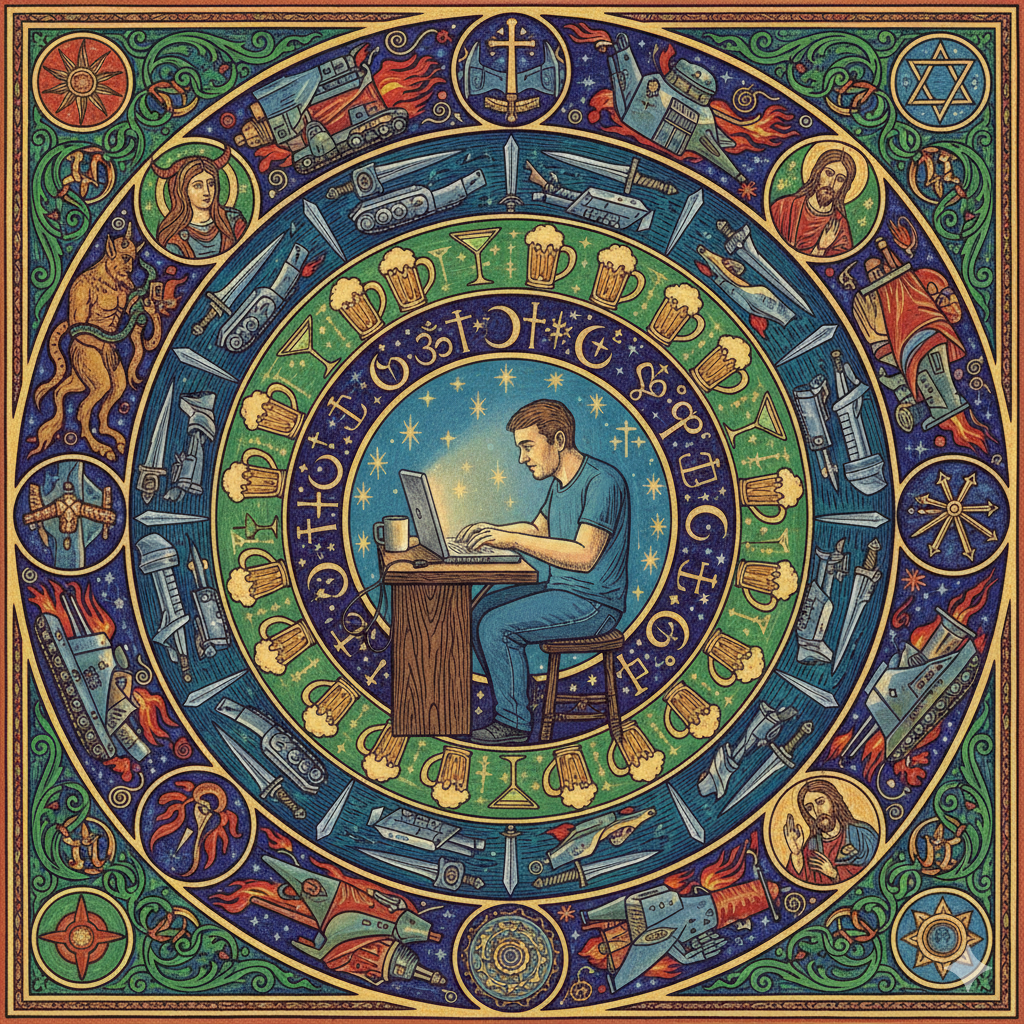
Shriekings and Windings

I like to critique intellectual history—more the armchair type than the academic varietal—because it often reflects the open biases of the commentator rather than having been developed by a neutral analysis of the past and its relationship to our pending futures. So when I read about Husserl’s ideas of geometry and Galileo or the relative merits of Adam Smith’s The Theory of Moral Sentiments, I leave the critical analysis to the experts, equipped as they are with the proper academic insights. But columnists are not generally subject-matter experts, just enthusiasts who are driven by profession to justify their insights and prognostications by reference to history and ideas. And they substitute biases for depth far too often. This is true again today, with Leighton Woodhouse’s op-ed in The New York Times, “Donald Trump: Pagan King.” It begins gently enough, with a quote by Canada’s Mark Carney from Thucydides about power in international relations, but then quickly dissolves into an unsupportable argument about how Christianity was uniquely civilizing of the pagan world by introducing all the positive morals that we associate with the gentler, humbler aspects of the religion, mostly on the back of a single source.

This through line is embarrassed by the theology, history, and facts of how Western civilization matured, as I and hundreds of other commentators pointed out (this chestnut is getting repetitive, too). This is not meant to rob Christianity of its influence in the last two thousand years, just to temper it responsibly and note that however one scopes “paganism,” Enlightenment rationality, high and low, shared aspects of pagan forms of thinking, and was clearly influenced by it as we move into the formative phase of the modern state period and formulations of democracy.… Read the rest

Humility is Pervasive

We are having an intimate holiday season with food, family, and small adventures along the Oregon coast. There were hints of Christmas with presents and music, as well as new Yule poetry that celebrates the cycles of the ocean in a natural dialogue with the seasonal flow: “King tides pull the world upward / … / Whales coast through gabled waters…” And then there are the swirling culture wars out there somewhere trying to deny us our diverse ideas and new traditions. We don’t worry much about their misdirection, but find the lack of creativity disheartening. Why not learn and invent new ways of thinking about society and culture?

Rabbi David Wolpe at Harvard Divinity has a more historical and intellectualized take on modern life in the Atlantic where he tries to collapse all the complexity of modern political instincts into an amalgam about insufficient humility about our own ideas and capabilities. I like critiquing these kinds of intellectual histories because I am humble enough to doubt that singular ideas can explain all the myriad ways of flourishing in human history. “The Return of the Pagans” maps the contemporary left with their environmental worship—and the right with heroic icons like Donald Trump—to something like the Greco-Roman idolization of beauty, power, wealth, and creativity. It is the invention of monotheism that focused the ancient mind on a singular divinity that we poor humans can always prostrate our tiny plans before. Elon Musk shouldn’t strain to get to Mars. Tech Bros shouldn’t accelerate technological change without deep humility about the impact on society. The ultra-wealthy used to be more concerned for using their wealth for good. Everyone should instead contemplate their imperfect sin-nature in the face of perfection.… Read the rest