Doubt at the Limit

I seem to have a central theme to many of the last posts that is related to the demarcation between science and non-science, and also to the limits of what rationality allows where we care about such limits. This is not purely abstract, though, as we can see in today’s anti-science movements, whether anti-vaccination, flat Earthers, climate change deniers, or intelligent design proponents. Just today, Ars Technica reports on the first of these. The speakers at the event, held in close proximity to a massive measles outbreak, ranged from a “disgraced former gastroenterologist” to an angry rabbi. Efforts to counter them, in the form of a letter from a county supervisor and another rabbi, may have had an impact on the broader community, but probably not the die-hards of the movement.

Meanwhile, Lee Mcyntire at Boston University suggests what we are missing in these engagements in a great piece in Newsweek. Mcyntire applies the same argument to flat Earthers that I have applied to climate change deniers: what we need to reinforce is the value and, importantly, the limits inherent in scientific reasoning. Insisting, for example, that climate change science is 100% squared away just fuels the micro-circuits in the so-called meta-cognitive strategies regions of the brains of climate change deniers. Instead, Mcyntire recommends science engages the public in thinking about the limits of science, showing how doubt and process lead us to useable conclusions about topics that are suddenly fashionably in dispute.

No one knows if this approach is superior to the alternatives like the letter-writing method by authorities in the vaccination seminar approach, and it certainly seems longer term in that it needs to build against entrenched ideas and opinions, but it at least argues for a new methodology.… Read the rest

Bright Sarcasm in the Classroom

When a Pew research poll discovered a shocking divide between self-identifying Republicans/GOP-leaning Independents and their Democratic Party opposites on the question of the value of higher education, the commentariat went apeshit. Here’s a brief rundown of sources, left, center, and right, and what they decided are the key issues:

  • National Review: Higher education has eroded the Western canon and turned into a devious plot to rob our children of good thinking, spiked with avocado toast.
  • Paul Krugman at New York Times: Conservative tribal identification leads to opposition to climate change science or evolution, and further towards a “grim” anti-intellectualism.
  • New Republic: There is no evidence that college kid’s political views are changed by higher education and, also, that conservative-minded professors aren’t much maltreated on campus either, so the conservative complaints are just overblown anti-liberal hype that, they point out, has some very negative consequences.

I would make a slightly more radical claim than Krugman, for instance, and one that is pointedly opposed to Simonson at National Review. In higher education we see not just a dedication to science but an active program of criticizing and deconstructing ideas like the Western canon as central to higher thought. In history, great man theories have been broken down into smart and salient compartments that explore the many ways in which groups and individuals, genders and ideas, all were part of fashioning the present. These changes, largely late 20th century academic inventions, have broken up the monopolies on how concepts of law, order, governance, and the worth of people were once formulated. This must be anti-conservative in the pure sense that there is little to be conserved from older ideas, except as objects of critique.… Read the rest

STEM Scholarships for Young Scholars

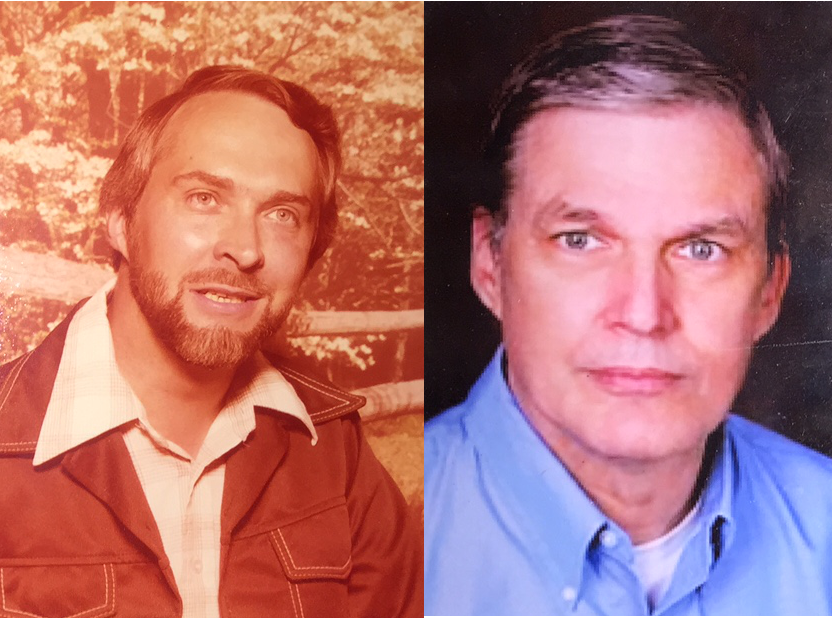
Jim and WirtI’m pleased to announce the availability of the James Davis and Wirt Atmar Memorial Scholarship at New Mexico State University. My wife and I are pleased to provide full scholarships for undergraduate and graduate students in STEM (Science, Technology, Engineering, and Mathematics) who are residents of New Mexico and El Paso County, Texas for the Spring semester of 2015 and beyond.

Dr. James Davis (Jim), my birth father, received his Ph.D. in Electrical Engineering and Astrophysics from University of Wisconsin at Madison in 1969. His involvement in gamma ray astronomy led him to take a professorship at New Mexico State in 1973 after post-docs at Oregon State, University of Colorado, and the Naval Observatory in Washington D.C. At NMSU, he met the unusual character Wirt Atmar, Sc.D. 1976, Electrical Engineering and Biology, who was involved in early work on evolutionary simulation and later developed new models for thinking about the evolution of sex as well as species nesting using information theory. When Jim became ill and later succumbed to an unknown kidney disorder following a transplant, Wirt and his wife (Ph.D. biochemistry) became a new family for me and I spent my teen years in an elaborate bohemian world of academic and computer technologies, merged. Wirt passed in 2009 after an unexpected heart attack associated with some other medical problems.

We hope that new and continuing students will benefit from this scholarship (six should be awarded each year initially), and Jim and Wirt’s commitment to science and technology will impact a new generation of students.… Read the rest

The Noble Gases of Social Theory

elem_inertgas1“Intellectually inert” is an insult that I reserve only for vast elaborations that present little in the way of new knowledge. I use it sparingly and with hesitation. Ross Douthat usually doesn’t rise to that level, though he does tend to be obsessed with vague theories about the breakdown of traditional (read “conservative”) societal mores and the consequences to modern America.

But his recent blog post “Social Liberalism as Class Warfare” is so numbing in his rhetorical elaborations that it was the only phrase that came to mind after slogging my way through it. So what’s the gist of the post?

  1. Maybe rich, smart folks pushed through divorce and abortion because they thought it made them freer.
  2. But poor, not-so-smart folks lacked sufficient self-control to use these tools wisely.
  3. Therefore, the rich, smart folks inadvertently made poor, not-so-smart folks engage in adverse behaviors that tore-up traditional families.
  4. And we get increased income and social inequality as a result.

An alternative argument might be:

  1. Folks kept getting smarter and better educated (everyone).
  2. They wanted to be free of old stuffy traditions.
  3. There were no good, new traditions that took their place, and insufficient touchstones of the “elite” values in the cultural ecosystems of the underclass.
  4. And we get increased income and social inequality as a result.

And here we get to the crux of my suggestion of inertness: it doesn’t matter whether the unintended consequences of iconoclasty differentially impact socioeconomic strata. What matters is what can actually be done about it that is voluntary rather than imposed. After all, that is what the meritocracy of educated folks do in Douthat’s own calculus of assortative mating. And it won’t be that Old Time Religion because of (1) and (2), above.Read the rest

Trust in What? Counterpoint

Peter Berkowitz at Hoover Institute argues in Wall Street Journal that higher education is a liberal indoctrinating mechanism. The article centers on a report, available here, that looks at the University of California system.

There is not much new in the report. It repeats the mantra that core courses in Western Civilization are an essential and missing part of many educational curricula. It also rounds up the disturbing result that has been circulated for some time: it is difficult to assess the value of college educations. Quoting the report quoting studies of the efficacy of college:

We observe no statistically significant gains in critical thinking, complex reasoning, and writing skills for at least 45 percent of the students in our study.

That doesn’t surprise me, but I’m still not altogether certain that critical thinking can actually be taught despite efforts to try to do so in recent decades.  More interesting, though, is the attempt by the authors to try to link this skills deficit to progressive political activism:

If graduates cannot even write short declarative sentences competently, that is not surprising when writing courses neglect writing and focus instead on radical politics. When graduates cannot read and extrapolate from books of any difficulty, that is what one would expect when reading lists so often give them books written at the superficial level of journalism rather than more complex works that would challenge them.

Let’s dissect. What do these imagined writing courses look like? Most low-level writing courses emphasize a variety of writing styles, but has the UC system substituted political activism for actual writing instruction? The report is rather vague about that, instead focusing on descriptions of how the professors made political statements and gave little writing advice, as reported by complaining students on a website.… Read the rest