Creativity and Proximate Causation

Combining aspects of the previous posts, what proximate mechanisms might be relevant to the notion of artistic fitness? Scott Barry Kauffman at www.creativitypost.com rounds up some of the most interesting recent research and thinking on this topic in his post, Must One Risk Madness to Achieve Genius?

Touching on work by luminaries like Susan Blackmore and others, Scott drives from personality assessment concepts down through the role of dopamine in trying to identify whether there is a spectrum of observable traits that are linked to creativity and artistic achievement.

Notable:

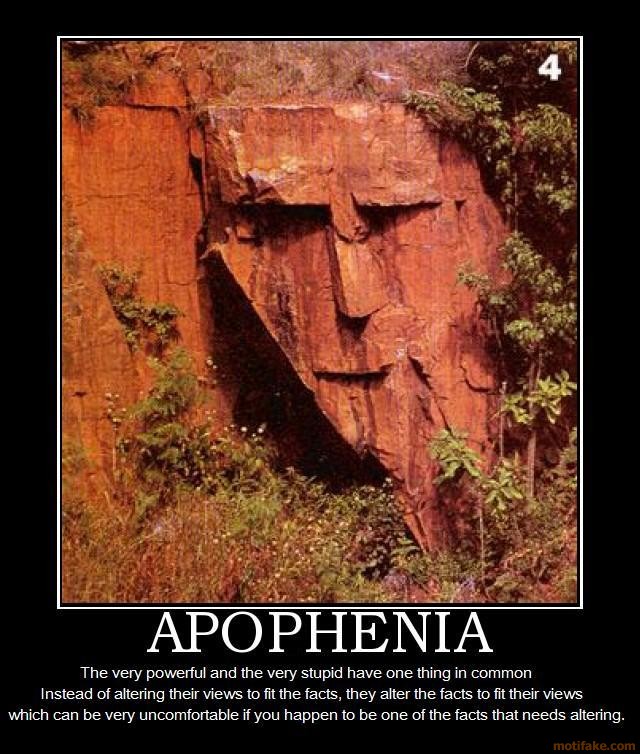
Daniel Nettle and Helen Clegg found that apophenia was positively related to a higher number of sexual partners for both men and women, and this relationship was explained by artistic creative activity. Similarly, in a more recent study conducted by Helen Cleff, Daniel Nettle, and Dorothy Miell, they found that more successful male artists (who are presumably higher in apophenia) had more sexual partners than less successful male artists.

Apophenia means seeing patterns in the environment where none may be present, a central theme in my second novel, Signals and Noise.

We can hypothesize also, based on the distribution from schizophrenia through schizotypy, through to “normal,” that there must be a large complement of interacting genes involved in these traits. This is supported by the evidence of genetic predispositions for schizophrenia, for instance, but also by the frustrating lack of success in identifying the genes that are involved.  This distribution may, in fact, be one of the most critical aspects of what it means to be human:

Were it not for those “disordered” genes, you wouldn’t have extremely creative, successful people.  Being in the absolute middle of every trait spectrum, not too extreme in any one direction, makes you balanced, but rather boring. 

Read the rest

Multilevel Selection and Proximate Causation

A strong critique of On the Role of Males by Dawkins was, put simply, that it continues the wrongheaded pursuit of the notion of “multilevel selection” that confuses the vehicles and replicators in the selection process. In this case, selfish genetics precludes the application of a lossy filter for genetic defects because it becomes a species-level selective mechanism.

While largely a technical distinction in evolutionary theory, much remains to be explained if we presume that there are no selective pressures that operate at levels above the genetic. For instance, when human females are subject to environmental stressors, the sex ratio changes to favor boys.  From Valerie Grant’s Wartime sex ratios: Stress, male vulnerability and the interpretation of atypical sex ratio data:

At the end of war, and other times of both chronic and acute stress, remarkable changes occur in the human secondary (birth) sex ratio. At the end of a long war, significantly more boys are born; after a short war, or disaster, fewer boys than usual are born six to nine months later. Since it is commonly held that the sex of the offspring is a matter of chance, these data provide an intriguing problem; but new findings in reproductive physiology, and an increased understanding of male vulnerability, could help resolve it. It appears the sex ratio of offspring may be influenced by variations in the mother’s follicular testosterone. Under conditions of chronic stress, maternal testosterone rises, resulting in an increase in male conceptions; but these same stressful conditions also exacerbate differential male vulnerability, so more males are lost during pregnancy. At the end of war, improving conditions temper male vulnerability, leaving higher sex ratios at birth.

Read the rest

Artistic Fitness

Following on Wirt’s 1991 treatise, On the Role of Males, that suggests that sexual caste is a meta-trait that operates at a level above simple, beanbag “selfish genetics” by supporting eliminating genetic defects through Y chromosomes (unmasked heterozygous alleles) combined with combative behavior, we can easily ask what other traits elevate female choices for mammals because, by being selective, female choice accelerates evolution even more. And, for humankind, we can ask the most interesting question: what drives women to desire men?

From Geoffrey Miller’s Aesthetic fitness: How sexual selection shaped artistic virtuosity as a fitness indicator and aesthetic preferences as mate choice criteria:

From 1871 until the turn of the 20th century, Darwinian aesthetics was an active area of theorizing.  Darwin (1871) himself viewed the human visual arts as an outgrowth of an instinct for body ornamentation.  He pointed out that males in most cultures indulge in much more self-adornment than females, as predicted by his sexual selection theory. (He understood that men of his own culture ornamented themselves with country estates and colonial treasures rather than tattoos and penis sheaths).  Herbert Spencer argued that sexual selection produced most of the beauty in nature and culture, while Max Nordau posited a neurophysiological link between reproductive urges and artistic creativity, which Sigmund Freud appropriated in this theory of art as sublimated sexuality.   Friedrich Nietzsche developed an especially intriguing and little-appreciated biological aesthetics in The Will to Power, in the section titled ‘The will to power as art’. Nietzsche (1883-1888/1968, p. 421) also accepted a sexual display function for the visual arts, writing “Artists, if they are any good, are (physically as well) strong, full of surplus energy, powerful animals, sensual; without a certain overheating of the sexual system a Raphael is unthinkable.”

Read the rest

Experimental Positive Morality

Gated from Pinker’s The Better Angels of our Nature, the Dutch experiments concerning the “broken window hypothesis” are illuminating. The “broken window hypothesis” dates to the 1980s when criminologists Wilson and Kelling suggested that broken windows in an abandoned building might signal other vandals that breaking windows is permissible. This theory, though widely disputed among criminologists, informed increased enforcement efforts in the United States in the 1990s that correlated with the amazing reductions in the crime rate that have continued into the current decade.

What of the Dutch experiments? When artificial circumstances are established where people can, for instance, litter fliers, people will litter more when they are in an environment already littered or surrounded by buildings covered with graffiti. Small acts of theft also are enhanced by a shady environment.

If our moral sentiments are so heavily influenced by our environment, we don’t need convincing that our moral predispositions are socially influenced, as well. Teenagers and college students are case studies.

But what of positive influences? If graffiti enhances criminality, and a neutral environment is, well, neutral, is it possible that a beautiful, inspiring environment would promote positive morality?

In many cities and towns, artistic murals are applied to high-graffiti areas with the expressed purpose of eliminating graffiti, for example. Can astonishing architecture do similar things? Following the Dutch experimental setup, it would be easy to place fliers on bicycles around art galleries and interesting buildings, then monitor the littering rates. There are obvious problems with this methodology in that the people who live and work in some areas may have educational, class, and other differences with those who traffic other areas that are more prone to littering and graffiti.… Read the rest

Transcendent Ivory

Alain de Botton has an interesting suggestion in the Wall Street Journal: create restaurants that are communal and that are designed to foster social interaction with an almost religious quality. This follows fairly closely on the heels of Hubert Dreyfus of Berkeley’s suggestion that maybe a good religious substitute can be found in mass sports events.

Why is a secular substitute for religion needed? It’s not completely clear. Each author argues that there is something fundamentally missing from our modern, cosmopolitan lives. What is missing is a sense of wonder, a sense of transcendence, a sense of community involvement, a sense of egoless participation, a universe of interactions based on something other than commercial interests, non-creepy greetings (de Botton)…something.

But they both neglect one of the crowning achievements of the modern world. Organized sports are largely passive events for the spectators. Restaurants are far too much about eating and not about ideas. What we do have, however, are university systems that are dedicated to the pursuit of knowledge and are accessible (with all the caveats of price) to almost all of the population. Only in university systems are people organized around a commitment to knowledge, science, and art. Economic status is less important than intellectual capacity. Ideas reign and social interaction is driven by common cause.

What we need is more ivory towers. After all, even the phrase may have been sourced from the Song of Solomon:

Thy neck is as a tower of ivory; thine eyes like the fishpools in Heshbon, by the gate of Bathrabbim: thy nose is as the tower of Lebanon which looketh toward Damascus

Read the rest

China and the Origin of Rights

Eric X. Li in The New York Times argues that:

America and China view their political systems in fundamentally different ways: whereas America sees democratic government as an end in itself, China sees its current form of government, or any political system for that matter, merely as a means to achieving larger national ends.

The implication developed further is that:

The West seems incapable of becoming less democratic even when its survival may depend on such a shift.

Li’s argument develops the idea that the repression of the Tiananmen movement in China was a strategic move that resulted in the underlying political stability for the current economic growth wave in China!

It’s hindsight bias, though, that builds on a kind of utilitarianism that asserts that there are political and social values that outweigh the rights of individuals (and that are predictable in their output). Indeed, Li asserts as much with:

The fundamental difference between Washington’s view and Beijing’s is whether political rights are considered God-given and therefore absolute or whether they should be seen as privileges to be negotiated based on the needs and conditions of the nation.

God is, of course, unnecessary in this equation. What is more relevant is whether an individual’s rights to freedom–whether of conscience or property–should be considered to supersede the desires of the state or collective. This was expressed as endowed by the Creator in the Declaration of Independence, but there was no particular justification provided in the Constitution. Rights are simply agreeably good in the US Constitution, subject to the same floor-plan as the rights and limitations of the Judiciary or the Legislative Branch, and even limited in some cases where just compensation for property seizures is allowable.… Read the rest

Bostrom and Computational Irreducibility


Nick Bostrom elevated philosophical concerns to the level of the popular press with his paper, Are You Living in a Computer Simulation? which argues that:

at least one of the following propositions is
true: (1) the human species is very likely to go extinct before reaching a “posthuman” stage; (2) any posthuman civilization is extremely unlikely to run a significant number of simulations of their evolutionary history (or variations thereof); (3) we are almost certainly living in a computer simulation.

A critical prerequisite of (3) is that human brains can be simulated in some way. And a co-requisite of that requirement is that the environment must be at least partially simulated in order for the brain simulations to believe in the sensorium that they experience:

If the environment is included in the simulation, this will require additional computing power – how much depends on the scope and granularity of the simulation. Simulating the entire universe down to the quantum level is obviously infeasible, unless radically new physics is discovered. But in order to get a realistic simulation of human experience, much less is needed – only whatever is required to ensure that the simulated humans, interacting in normal human ways with their simulated environment, don’t notice any irregularities.

Bostrom’s efforts to minimize the required information content doesn’t ring true, however. In order for a perceived universe to provide even “local” consistency, then large-scale phenomena must be simulated with perfect accuracy. Even if, as Bostrom suggests, noticed inconsistencies can be rewritten in the brains of the simulated individuals, those inconsistencies would have to be eventually resolved into a consistent universe.

Further, creating local consistency without emulating quantum-level phenomena requires first computing the macroscopic phenomena that would be a consequence of those quantum events.… Read the rest

Sex and Error

Just in time for Valentine’s Day, the introduction to my (foster) father’s 1991 Animal Behavior treatise, On the Role of Males (don’t worry guys, we get to expurgate genetic errors):

The value of males to a species has often been regarded as enigmatic. An all-female, parthenogenetic population has significant theoretical advantages over a population that must reproduce sexually. But if sexuality is to be advocated as highly advantageous to the species, the questions surrounding gender differentiation must not be confused with the questions concerning the value of sex. Two distinct genders are not necessary to engage sexual recombination. A broad array of hypotheses for the evolution and persistence of sexuality appears in Michod & Levin (1988), yet for all of the postulated arguments, males are unnecessary. While purpose cannot always be easily ascribed to a specific trait or behavior, the converse can be argued with confidence. The widespread, common existence of a specific trait, behavior or caste insures that the persistence of the attribute possesses some fundamental purpose.

Protracted demonstrations of competitive vigor are common in males, especially so in polygynous species. Darwin (1874) outlined in detail the virtual ubiquity of male aggressive “pugnacity” in animals, concluding that “It is incredible that all this should be purposeless” (1874, p. 615). The hypotheses to be argued here are threefold: (1) males are an auxiliary, relatively sacrificial sex of enhanced fragility, whose demonstrations of competitive vigor operate to expose, exaggerate, and expurgate significant gene error from the germline, (2) the aggressively competitive behavior of polygynous males is but one component of a hierarchy of genetic information assurance mechanisms that must be inevitably evolved, and (3) gene defect expurgation from the germline greatly accelerates the evolutionary optimization, and thus the competitiveness, of the species.

Read the rest

Radical Triangulation

Donald Davidson argued that descriptive theories of semantics suffered from untenable complications that could, in turn, be solved by a holistic theory of meaning. Holism, in this sense, is due to the dependency of words and phrases as part of a complex linguistic interchange. He proposed “triangulation” as a solution, where we zero-in on a tentatively held belief about a word based on other beliefs about oneself, about others, and about the world we think we know.

This seems daringly obvious, but it is merely the starting point of the hard work of what mechanisms and steps are involved in fixing the meaning of words through triangulation. There are certainly some predispositions that are innate and fit nicely with triangulation. These are subsumed under The Principle of Charity and even the notion of the Intentional Stance in how we regard others like us.

Fixing meaning via model-making has some curious results. The language used to discuss aesthetics and art tends to borrow from other fields (“The narrative of the painting,” “The functional grammar of the architecture.”) Religious and spiritual terminology often has extremely porous models: I recently listened to Episcopalians discuss the meaning of “grace” for almost an hour with great glee but almost no progress; it was the belief that they were discussing something of ineffable greatness that was moving to them. Even seemingly simple scientific ideas become elaborately complex for both children and adults: we begin with atoms as billiard balls that mutate into mini solar systems that become vibrating clouds of probabilistic wave-particles around groups of properties in energetic suspension by virtual particle exchange.

Can we apply more formal models to the task of staking out this method of triangulation?… Read the rest

Puritanical Warfare

The LA Times sheds additional light on the complex question of America’s founding and the religious ideals of historical figures in this piece.  Author John M. Barry described Roger Williams breaking away from the Massachusetts Pilgrims to found Rhode Island, quoting his view of religious liberty:

[even] “the most Paganish, Jewish, Turkish, or Antichristian consciences and worships” [should be allowed to pray or not pray]

“forced worship stinks in God’s nostrils.”

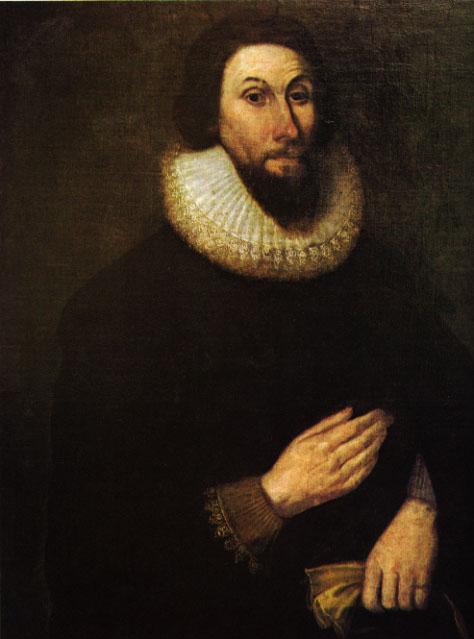
Williams is notable because he stands in stark contrast to John Winthrop who is the source of the “city upon a hill” that is a common reference point in presidential aspirational speeches:

For we must Consider that we shall be as a City upon a Hill, the eyes of all people are upon us

Yet, for all that shiny exceptionalism, Puritans believed slavery was justified by the Old Testament, harassed and executed Quakers, reviled one another as heretics, and believed that God had killed Native Americans using smallpox to give the land to the Puritans:

But for the natives in these parts, God hath so pursued them, as for 300 miles space the greatest part of them are swept away by smallpox which still continues among them. So as God hath thereby cleared our title to this place, those who remain in these parts, being in all not 50, have put themselves under our protection.

The goal of a GOP candidate using the “hill” quote is to invoke the ghost of Reagan. Sadly, the important historical lessons about tolerance and the evolutionary seeds of our modern understanding of the ethics of freedom get lost when it becomes jingoistic.… Read the rest