Transcendent Ivory

Alain de Botton has an interesting suggestion in the Wall Street Journal: create restaurants that are communal and that are designed to foster social interaction with an almost religious quality. This follows fairly closely on the heels of Hubert Dreyfus of Berkeley’s suggestion that maybe a good religious substitute can be found in mass sports events.

Why is a secular substitute for religion needed? It’s not completely clear. Each author argues that there is something fundamentally missing from our modern, cosmopolitan lives. What is missing is a sense of wonder, a sense of transcendence, a sense of community involvement, a sense of egoless participation, a universe of interactions based on something other than commercial interests, non-creepy greetings (de Botton)…something.

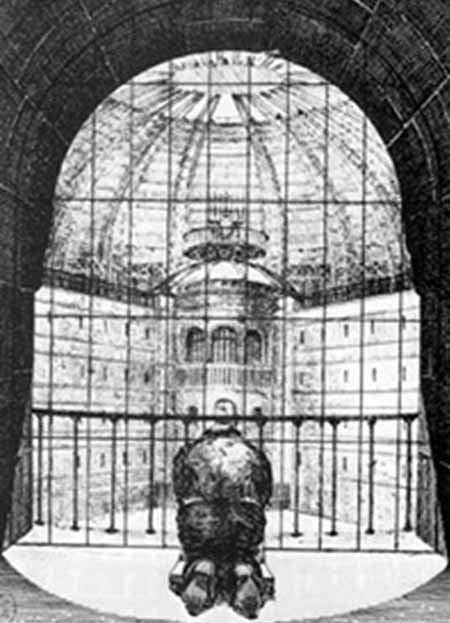
But they both neglect one of the crowning achievements of the modern world. Organized sports are largely passive events for the spectators. Restaurants are far too much about eating and not about ideas. What we do have, however, are university systems that are dedicated to the pursuit of knowledge and are accessible (with all the caveats of price) to almost all of the population. Only in university systems are people organized around a commitment to knowledge, science, and art. Economic status is less important than intellectual capacity. Ideas reign and social interaction is driven by common cause.

What we need is more ivory towers. After all, even the phrase may have been sourced from the Song of Solomon:

Thy neck is as a tower of ivory; thine eyes like the fishpools in Heshbon, by the gate of Bathrabbim: thy nose is as the tower of Lebanon which looketh toward Damascus

Read the rest

China and the Origin of Rights

Eric X. Li in The New York Times argues that:

America and China view their political systems in fundamentally different ways: whereas America sees democratic government as an end in itself, China sees its current form of government, or any political system for that matter, merely as a means to achieving larger national ends.

The implication developed further is that:

The West seems incapable of becoming less democratic even when its survival may depend on such a shift.

Li’s argument develops the idea that the repression of the Tiananmen movement in China was a strategic move that resulted in the underlying political stability for the current economic growth wave in China!

It’s hindsight bias, though, that builds on a kind of utilitarianism that asserts that there are political and social values that outweigh the rights of individuals (and that are predictable in their output). Indeed, Li asserts as much with:

The fundamental difference between Washington’s view and Beijing’s is whether political rights are considered God-given and therefore absolute or whether they should be seen as privileges to be negotiated based on the needs and conditions of the nation.

God is, of course, unnecessary in this equation. What is more relevant is whether an individual’s rights to freedom–whether of conscience or property–should be considered to supersede the desires of the state or collective. This was expressed as endowed by the Creator in the Declaration of Independence, but there was no particular justification provided in the Constitution. Rights are simply agreeably good in the US Constitution, subject to the same floor-plan as the rights and limitations of the Judiciary or the Legislative Branch, and even limited in some cases where just compensation for property seizures is allowable.… Read the rest

Bostrom and Computational Irreducibility


Nick Bostrom elevated philosophical concerns to the level of the popular press with his paper, Are You Living in a Computer Simulation? which argues that:

at least one of the following propositions is
true: (1) the human species is very likely to go extinct before reaching a “posthuman” stage; (2) any posthuman civilization is extremely unlikely to run a significant number of simulations of their evolutionary history (or variations thereof); (3) we are almost certainly living in a computer simulation.

A critical prerequisite of (3) is that human brains can be simulated in some way. And a co-requisite of that requirement is that the environment must be at least partially simulated in order for the brain simulations to believe in the sensorium that they experience:

If the environment is included in the simulation, this will require additional computing power – how much depends on the scope and granularity of the simulation. Simulating the entire universe down to the quantum level is obviously infeasible, unless radically new physics is discovered. But in order to get a realistic simulation of human experience, much less is needed – only whatever is required to ensure that the simulated humans, interacting in normal human ways with their simulated environment, don’t notice any irregularities.

Bostrom’s efforts to minimize the required information content doesn’t ring true, however. In order for a perceived universe to provide even “local” consistency, then large-scale phenomena must be simulated with perfect accuracy. Even if, as Bostrom suggests, noticed inconsistencies can be rewritten in the brains of the simulated individuals, those inconsistencies would have to be eventually resolved into a consistent universe.

Further, creating local consistency without emulating quantum-level phenomena requires first computing the macroscopic phenomena that would be a consequence of those quantum events.… Read the rest

Sex and Error

Just in time for Valentine’s Day, the introduction to my (foster) father’s 1991 Animal Behavior treatise, On the Role of Males (don’t worry guys, we get to expurgate genetic errors):

The value of males to a species has often been regarded as enigmatic. An all-female, parthenogenetic population has significant theoretical advantages over a population that must reproduce sexually. But if sexuality is to be advocated as highly advantageous to the species, the questions surrounding gender differentiation must not be confused with the questions concerning the value of sex. Two distinct genders are not necessary to engage sexual recombination. A broad array of hypotheses for the evolution and persistence of sexuality appears in Michod & Levin (1988), yet for all of the postulated arguments, males are unnecessary. While purpose cannot always be easily ascribed to a specific trait or behavior, the converse can be argued with confidence. The widespread, common existence of a specific trait, behavior or caste insures that the persistence of the attribute possesses some fundamental purpose.

Protracted demonstrations of competitive vigor are common in males, especially so in polygynous species. Darwin (1874) outlined in detail the virtual ubiquity of male aggressive “pugnacity” in animals, concluding that “It is incredible that all this should be purposeless” (1874, p. 615). The hypotheses to be argued here are threefold: (1) males are an auxiliary, relatively sacrificial sex of enhanced fragility, whose demonstrations of competitive vigor operate to expose, exaggerate, and expurgate significant gene error from the germline, (2) the aggressively competitive behavior of polygynous males is but one component of a hierarchy of genetic information assurance mechanisms that must be inevitably evolved, and (3) gene defect expurgation from the germline greatly accelerates the evolutionary optimization, and thus the competitiveness, of the species.

Read the rest

Radical Triangulation

Donald Davidson argued that descriptive theories of semantics suffered from untenable complications that could, in turn, be solved by a holistic theory of meaning. Holism, in this sense, is due to the dependency of words and phrases as part of a complex linguistic interchange. He proposed “triangulation” as a solution, where we zero-in on a tentatively held belief about a word based on other beliefs about oneself, about others, and about the world we think we know.

This seems daringly obvious, but it is merely the starting point of the hard work of what mechanisms and steps are involved in fixing the meaning of words through triangulation. There are certainly some predispositions that are innate and fit nicely with triangulation. These are subsumed under The Principle of Charity and even the notion of the Intentional Stance in how we regard others like us.

Fixing meaning via model-making has some curious results. The language used to discuss aesthetics and art tends to borrow from other fields (“The narrative of the painting,” “The functional grammar of the architecture.”) Religious and spiritual terminology often has extremely porous models: I recently listened to Episcopalians discuss the meaning of “grace” for almost an hour with great glee but almost no progress; it was the belief that they were discussing something of ineffable greatness that was moving to them. Even seemingly simple scientific ideas become elaborately complex for both children and adults: we begin with atoms as billiard balls that mutate into mini solar systems that become vibrating clouds of probabilistic wave-particles around groups of properties in energetic suspension by virtual particle exchange.

Can we apply more formal models to the task of staking out this method of triangulation?… Read the rest

Puritanical Warfare

The LA Times sheds additional light on the complex question of America’s founding and the religious ideals of historical figures in this piece.  Author John M. Barry described Roger Williams breaking away from the Massachusetts Pilgrims to found Rhode Island, quoting his view of religious liberty:

[even] “the most Paganish, Jewish, Turkish, or Antichristian consciences and worships” [should be allowed to pray or not pray]

“forced worship stinks in God’s nostrils.”

Williams is notable because he stands in stark contrast to John Winthrop who is the source of the “city upon a hill” that is a common reference point in presidential aspirational speeches:

For we must Consider that we shall be as a City upon a Hill, the eyes of all people are upon us

Yet, for all that shiny exceptionalism, Puritans believed slavery was justified by the Old Testament, harassed and executed Quakers, reviled one another as heretics, and believed that God had killed Native Americans using smallpox to give the land to the Puritans:

But for the natives in these parts, God hath so pursued them, as for 300 miles space the greatest part of them are swept away by smallpox which still continues among them. So as God hath thereby cleared our title to this place, those who remain in these parts, being in all not 50, have put themselves under our protection.

The goal of a GOP candidate using the “hill” quote is to invoke the ghost of Reagan. Sadly, the important historical lessons about tolerance and the evolutionary seeds of our modern understanding of the ethics of freedom get lost when it becomes jingoistic.… Read the rest

Learning around the Non Sequiturs

If Solomonoff Induction and its conceptual neighbors have not yet found application in enhancing human reasoning, there are definitely areas where they have potential value.  Automatic, unsupervised learning of sequential patterns is an intriguing area of application. It also fits closely with the sequence inferencing problem that is at the heart of algorithmic information theory.

Pragmatically, the problem of how children learn the interchangeability of words that is the basic operation of grammaticality is one area where this kind of system might be useful. Given a sequence of words or symbols, what sort of information is available for figuring out the grammatical groupings? Not much beyond memories of repetitions, often inferred implicitly.

Could we apply some variant of Solomonoff Induction at this point? Recall that we want to find the most compact explanation for the observed symbol stream. Recall also that the form of the explanation is a computer program of some sort that consists of logical functions. It turns out that creating a program that, for every possible sequence, finds the absolutely most compact program is uncomputable. The notion of what is “uncomputable” (or incomputable) is a mathematical result that has to do with how many different potential programs must be investigated to try to find the shortest one. If that number grows faster than the length of a program, it becomes uncomputable. Being uncomputable is not a death sentence, however. We can come up with approximate methods that try to follow the same procedure because any method that incrementally compresses the explanatory program will get closer to the hypothetical best program.

Sequitur by Nevill-Manning and Witten is an example of a procedure that approximates Algorithmic Information Theory optimization for string sequences.… Read the rest

Adaptive Ethics via iBooks Author

For fun, I decided to try writing a partial post using Apple’s iBooks Author. The application runs on Mac OS X Lion and is available for free. It appears to be derivative of Keynote, which explains Apple’s rapid development of the authoring tool.

There are some limitations, though. I couldn’t embed equations from Word for Mac 2011 without converting them into images. It also only publishes to iBookstore,  although you can export to PDF (as below). There are few PDF export options, however, and the metadata and labeling includes Apple logos.

Tearing apart the .iba format via unzip showed a collection of .jpg and .tiff images, a binary color array, and an .xml specification of the project. Fairly simple, but not including the compiled .epub file that iBookstore generally takes.

Total elapsed time: 1 hour (including download/installation). With improvements to the software and with more experience, that should be halved.

Read the rest

Evolutionary Oneirology

I was recently contacted by a startup that is developing a dream-recording app. The startup wants to automatically extract semantic relationships and correlate the narratives that dreamers type into their phones. I assume that the goal is to help the user try to understand their dreams. But why should we assume that dreams are understandable? We now know that waking cognition is unreliable, that meta-cognitive strategies influence decision making, that base rate fallacies are the norm, that perceptions are shaped by apophenia, that framing and language choices dominate decision-making under ambiguity, and that moral judgments are driven by impulse and feeling rather than any rational calculus.

Yet there are some remarkable consistencies about dream content that have led to elaborate theorization down through the ages. Dreams, by being cryptic, want to be explained. But the content of dreams, when sorted out, leads us less to Kerkule’s Rings or to Freud and Jung, and more to asking why there is so much anxiety present in dreams? The Evolutionary Theory of Dreaming by Finnish researcher Revonsuo tries to explain the overrepresentation of threats and fear in dreams by suggesting that the brain is engaged in a process of reliving conflict events as a form of implicit learning. Evidence in support of this theory includes experimental observations that threatening dreams increase in frequency for children who experienced trauma in childhood combined with the cross-cultural persistence of threatening dream content (and likely cross-species as anyone who has watched a cat twitch in deep sleep suspects). To date, however, the question of whether these dream cycles result in learning or improved responses to future conflict remains unanswered.

I turned down consulting for the startup because of time constraints, but the topic of dream anxiety comes back to me every few years when I startle out of one of those recurring dreams where I have not studied for the final exam and am desperately pawing through a sheaf of empty paper trying to find my notes.… Read the rest

Jingles and Thought

In the last post the issue of inductive inference was the focus, but human cognition, as Luke pointed out, is not just fallible but is unreliable by its very nature. Recent work has been revelatory in the ways our minds fail us when confronted with new information, and in the many ways that our experiences influence thought.

The idea that language and thought are tightly intertwined and that language may influence thought has been of interest since Sapir-Whorf‘s many flavors of snow, but became academically disreputable in the mid-20th Century as universality dominated linguistics via Chomsky. But the notion that language and thought are intertwined has continued to be investigated and recent work shows remarkable interactions.

Watching the messaging of the GOP Primaries between Gingrich and Romney (with Paul’s Libertarian dogs barking in the background), reminded me that there are other meta-cognitive strategies at work in our minds that are being exploited by the negative ads as well as the anti-Obama sentiment. But what is interesting is that some of the easiest ways of building positive sentiment are not being exploited. For example, a memorable jingle might be cheesy and retro, but would exploit the tendency for rhymes to be regarded as true. Using big, bold fonts for the message also helps.

I think it is time for the political jingle to return.… Read the rest