Against Nostalgia


Some conservatives carry on even as the bizarro world continues to invert reality on Trump’s watch. Over at National Review they are kvetching about state and local regulations for hair stylists. Damn, look at the market distortions! If only we could unlock that 1/2 of 1/10th of a percent of the market we would achieve libertarian liberation! Meanwhile, Donald Trump is taking an ownership stake in Intel and imposing export tariffs on Nvidia like a socialist dictator. And David Brooks at New York Times proclaims that cultural factors override the role of money in terms of making or breaking the success of people. If only we were more…Swedish we would not have to descend into nihilistic doom cycles.

It’s not that these aren’t partially true, of course, but merely that they are shadow-boxing on an old battlefield filled with muskets and cannonballs. The new war has moved on.

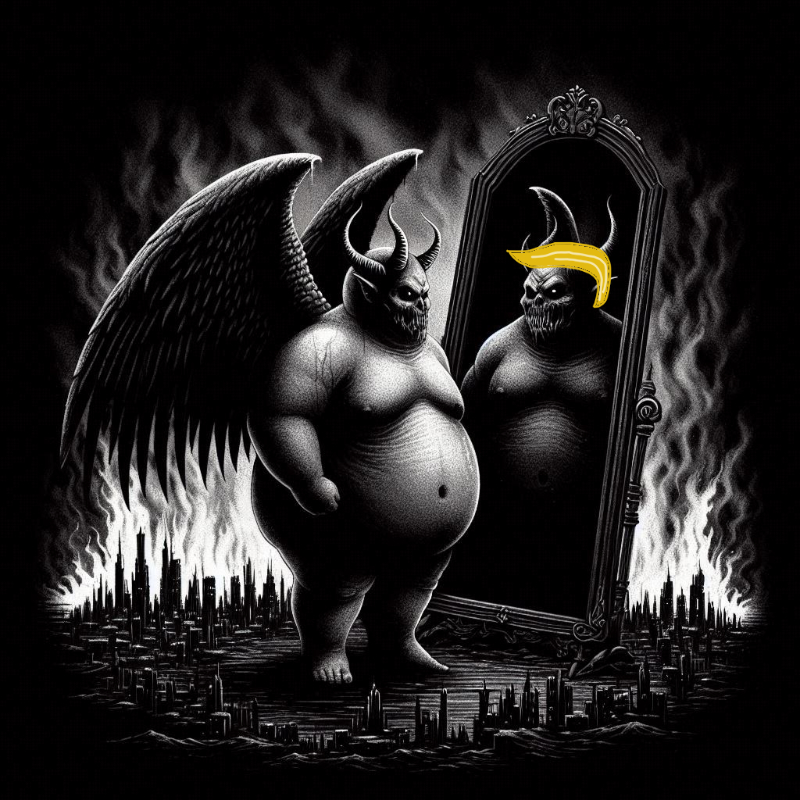
This inverted reality calls for something different. The notion that we can reclaim social stability through nostalgia or micro-microeconomics lacks sensibility, credibility, and honesty. We live in a modern world where even core concepts like the reliability of the Gospels is widely distrusted, which in part explains the increasing view of Christian institutions as centers of manipulation and cruelty. There never was any there there, just shadowy programming and ignorance before the internet era. Get them young enough and they can be groomed, like Epstein’s victims. The critical role of culture and institutions was always as fragile as the communications and information systems that supported it. Now there is nothing but the dark potential of power.

And here I am, so negative! And just after inventing my own religion built around trust and optimizing our personal and group engagement with the state and the world.… Read the rest

Contrasts and Failures, Hope and Awe

Russell Moore writes in the Atlantic that American evangelicalism is in crisis. There is a Faustian pact of unholy MAGA politics, conspiracy theories, and religious feelings that can only be remedied with a revival of the faith itself, laser-focused on Moore’s conceptions of what Christianity should strive to become. He acknowledges that there is a dark history to America’s evangelical movement through the 20th century. It was always political in close focus, with the maintenance of racism and exclusion at its core well before abortion was even a talking point. Anti-Catholicism and antisemitism were equally bundled up with the evangelical mindset. Beyond the moral failings that sloshed into politics, there was the structural marketing of the faith by televangelists and traveling ministries that turned the hoped-for internal conversion into a more cynical plot:

In the end, a market-driven religion gives rise to a market-driven approach to truth, and this development ultimately eviscerated conservative Christianity in the US and left it the possession of hypocrites and hucksters.

I’m not at all surprised. As information has become unlocked from the vaults of academic pursuits by modern technologies, the ripples of uncertainty about faith claims have spread and clashed with the desire to totalize the political, personal, pragmatic, and moral dimensions of evangelical beliefs. If a thing is so unquestionably right and good, it must infiltrate and own the mind, the body, the soul, the community, and the nation. So why is the world drifting away, seemingly inexorably?

But even those who leave their faith communities feel adrift, clinging to vague spirituality or buffet gorging across traditions in search of something that is satisfactory but different. But that is only in the best of moments, when a song triggers nostalgia or late after eggnog on Christmas Eve.… Read the rest