¡Reconquista! at 50K

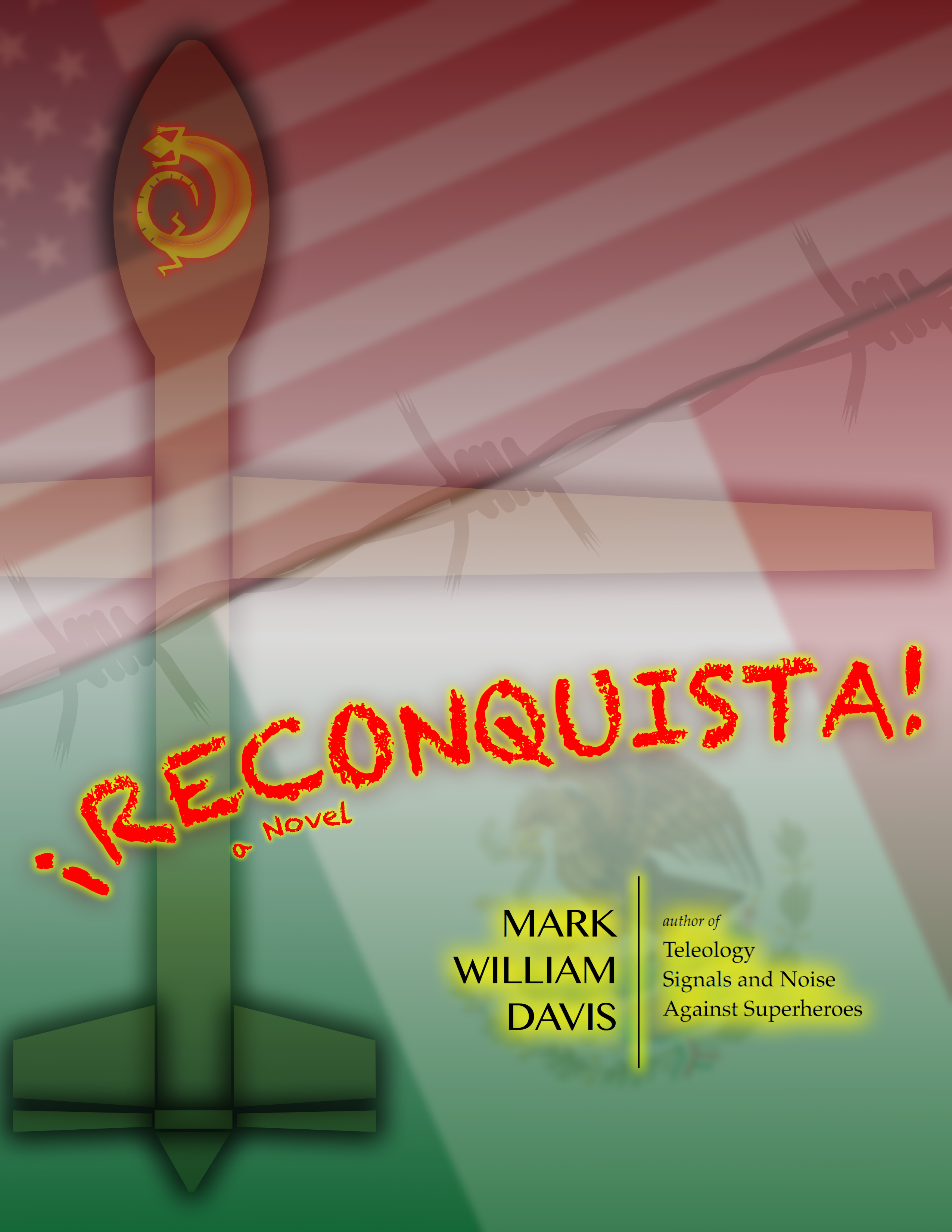
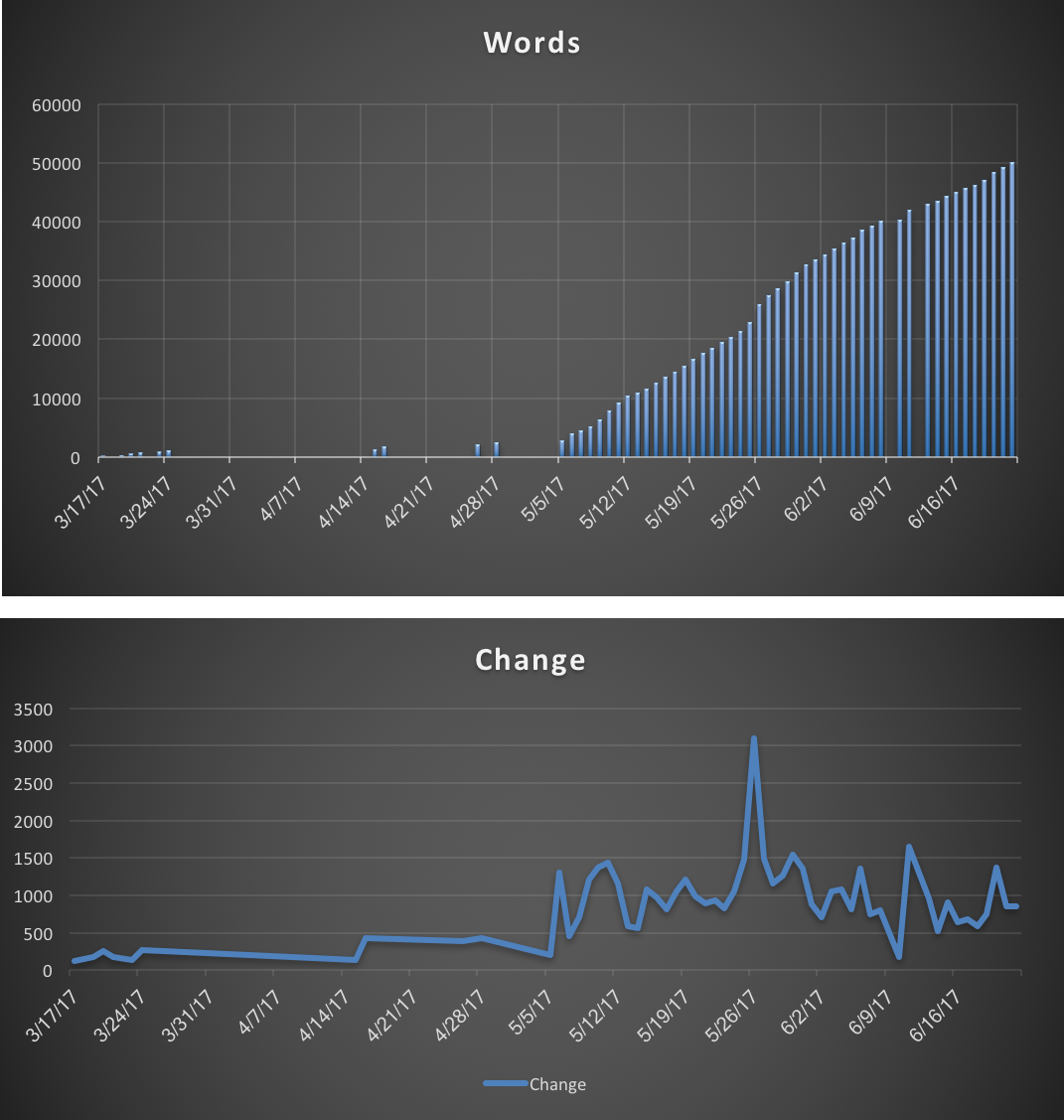
¡Reconquista! has taken on that magical quality of momentum where it is almost writing itself. Or maybe it’s just that satire, bleak and horrifying, is the perfect mood for the times. These counts do not include early plot development and notes, which read out at another 4K or more, depending on how you factor it.

The analytics put me on an exit trajectory around mid-August.

Read the rest

The Inevitability of Cultural Appropriation

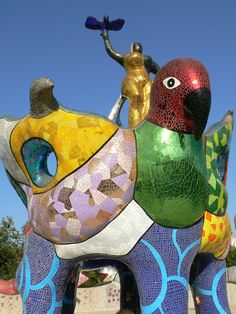
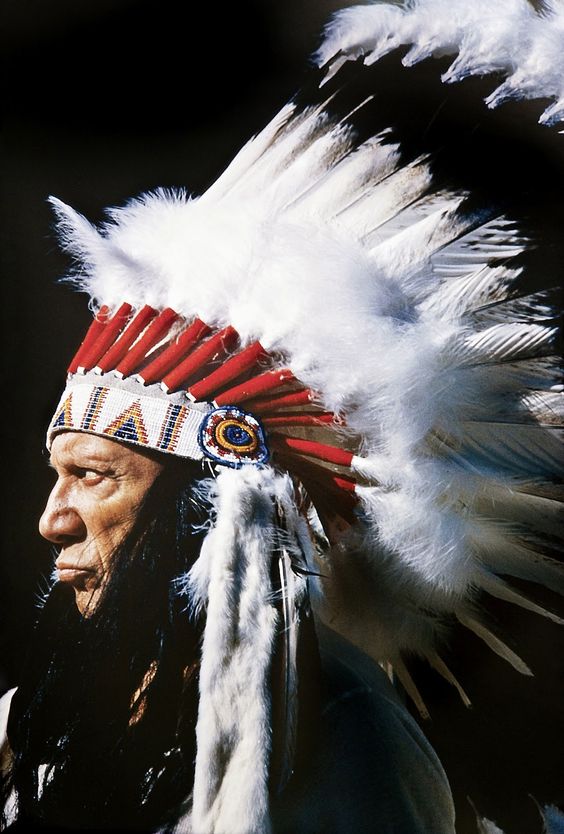
Picasso in Native HeaddressI’m on a TGV from Paris to Monaco. The sun was out this morning and the Jardin de Tuileries was filled with homages in tulips to various still lifes at the Louvre. Two days ago, at the Musée de quai Branly—Jacques Chirac, I saw the Picasso Primitif exposition that showcased the influence of indigenous arts on Picasso’s work through the years, often by presenting statues from Africa or Papua New Guinea side-by-side with examples of Picasso’s efforts through the years. If you never made the connection between his cubism and the statuary of Chad (like me), it is eye opening. He wasn’t particularly culturally sensitive—like everyone else until at least the 1960s—because the fascinating people and their cultural works were largely aesthetic objects to him. If he was aware of the significance of particular pieces (and he might have been), it was something he rarely acknowledged or discussed. The photos that tie Picasso to the African statues are the primary thread of the exhibition, with each one, taken at his California atelier or in Paris or whatnot, inscribed by the curators with a dainty red circle or oval to highlight a grainy African statue lurking in the background. Sometimes they provide a blow-up in case you can’t quite make it out. It is only with a full Native American headdress given to Picasso by the actor Gary Cooper that we see him actively mugging for a camera and providing weight to the show’s theme. Then, next, Brigitte Bardot is leaning over him at the California studio and her cleavage renders the distant red oval uninteresting.

I am writing daily about things I don’t fully understand but try to imbue with a sense of character, of interest, and even of humor.… Read the rest

Amazonian Griffins and the Fantastical New World

Background research for ¡Reconquista! (or any book) takes unexpected dips and turns, from Google Street Views of Mexicali, Mexico to the origins of Alta California and the campaigns of Colonel Frémont. But the most unusual find in a week punctuated by trail running in Guadalupe Mountains National Park and a brief, one hour, twenty minute circuit of Carlsbad Caverns (I was first in and had the descent largely to myself!), was a 19th-century translation of the Queen of California from Las Sergas de Esplandián. This 1510 book by Garci Rodríguez de Montalvo related an amazing tale that, as the translator and commenter Edward Everett Hale notes, provided the origin of the name of California, for Cortez imagined what is now Baja California to be an island that was to the West of the Indies, following Columbus’ lead in mislabeling the New World.

Hale’s translation and commentary are even more remarkable in their intertextual reading of the postbellum mindset that pervades all the way to San Francisco. He carries a descriptive thread likening the battle prowess of the Queen of California’s man-killing griffins to Civil War naval craft:

These griffins are the Monitors of the story, or, if the reader pleases, the Merrimacs.

And in those comparisons, he shows a careful traversal of residual war sentiments, though he is more direct in calling out the implicit racism of Hiram Powers’ statue of California for being incorrect in depicting Queen Calafia (sic) as classically whitewashed when she was described very clearly as “large, and black as the ace of clubs.”

But what of the story of Calafia? She is queen of an island of Amazonian-like women who kill men and boy children alike by feeding them to a hoard of semi-controllable griffins.… Read the rest

Against Superheroes is live on Amazon!

Grab a copy immediately if you must, but there will be a five day promotional give-away of the Kindle edition starting tomorrow. If you prefer print, the paperback edition should be available in a day or two.

This is the first edition and it is trimmed down from a rather portly initial cut, though it still runs to 300+ pages. The metanarrative that was removed will be available in the second edition. And then, I imagine, there will be the extended cut with additional excised spelling mistakes or something…… Read the rest

Solstice in the Crystal Cities of Talon

A chance encounter, a sloshy woman at a corner bar, a recollection of an uncle who fell into a well, all the tequila poured, all the prejudices spun out, about my accent and my allegedly highborn ways, about the elections and conspiratorial meanderings, my filters built into a Great Wall against a bareknuckle dustup, bloodied noses and cops and lights, and then, as the night drew up into its cold intestines, a mention just in passing that this uncle fell in the well on the solstice morning and became some kind of sloganeer, some kind of soothsayer. But it was more, I heard her faintly say, and that the shocks of that icy water aroused some otherworldly spirit within him, around 1958 or so, and he was cast out of his church and lost his business, an upwardly-mobile fin-tailed car magnate with a country-club future. He wandered the countryside with his well-sprung tale until impoverished and abandoned by his wife and two adorable children, her cousins, one who was now dead (the boy), crushed by a front-end loader at a construction pit, and the other who was a retired school librarian down in Fayetteville. That cousin had kept all his writings, all about the physics of Tlon.

My ears perked up and I asked her again what she had uttered, about the slurred syllables that came forth from her salted and limed lips. She repeated the word again, then laughed at me, hissed “Tlon” once more and shuttled her head side-to-side. It was another world her demented uncle had bragged about, some agitated dream erupting from his freezing parts while captive in that black bore. It was a solstice night, long, with the snows of the preceding week in skirts around the trees.… Read the rest

Against Superheroes and Novel Next

Editing is complete, cover designs are converging with new trade hardcover dustjacket form factors arriving, and all is looking swimmingly for a release in the immediate future. In the meantime, my next novel, racing to the front of the line ahead of the much-delayed Pornotopia and the impossibly ambitious Vin Diesel Versus the Vampires (An embedded board game? A film about the failure of the described unmade film? Really?), is ¡Reconquista!, a comedy incited by contemporary politics and my return to the border region.

It could only be a comedy, I decided. Anything less or more would be too heartbreaking.

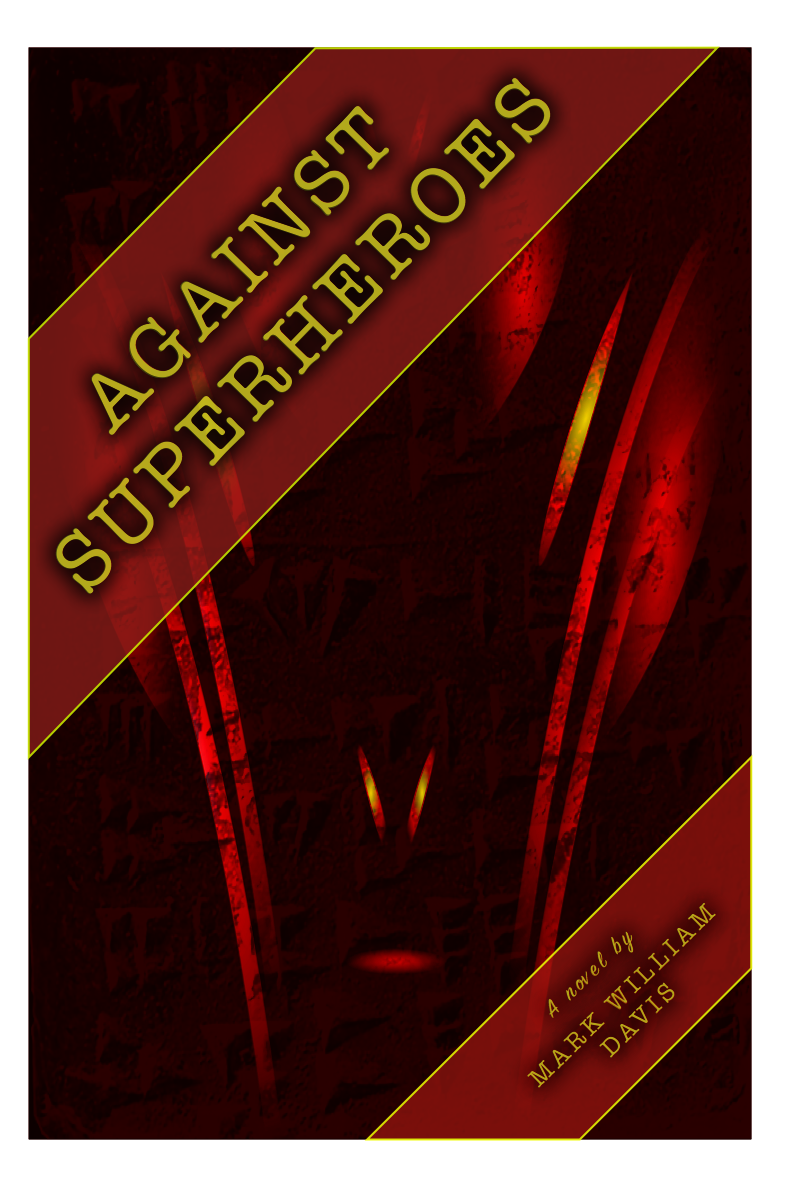
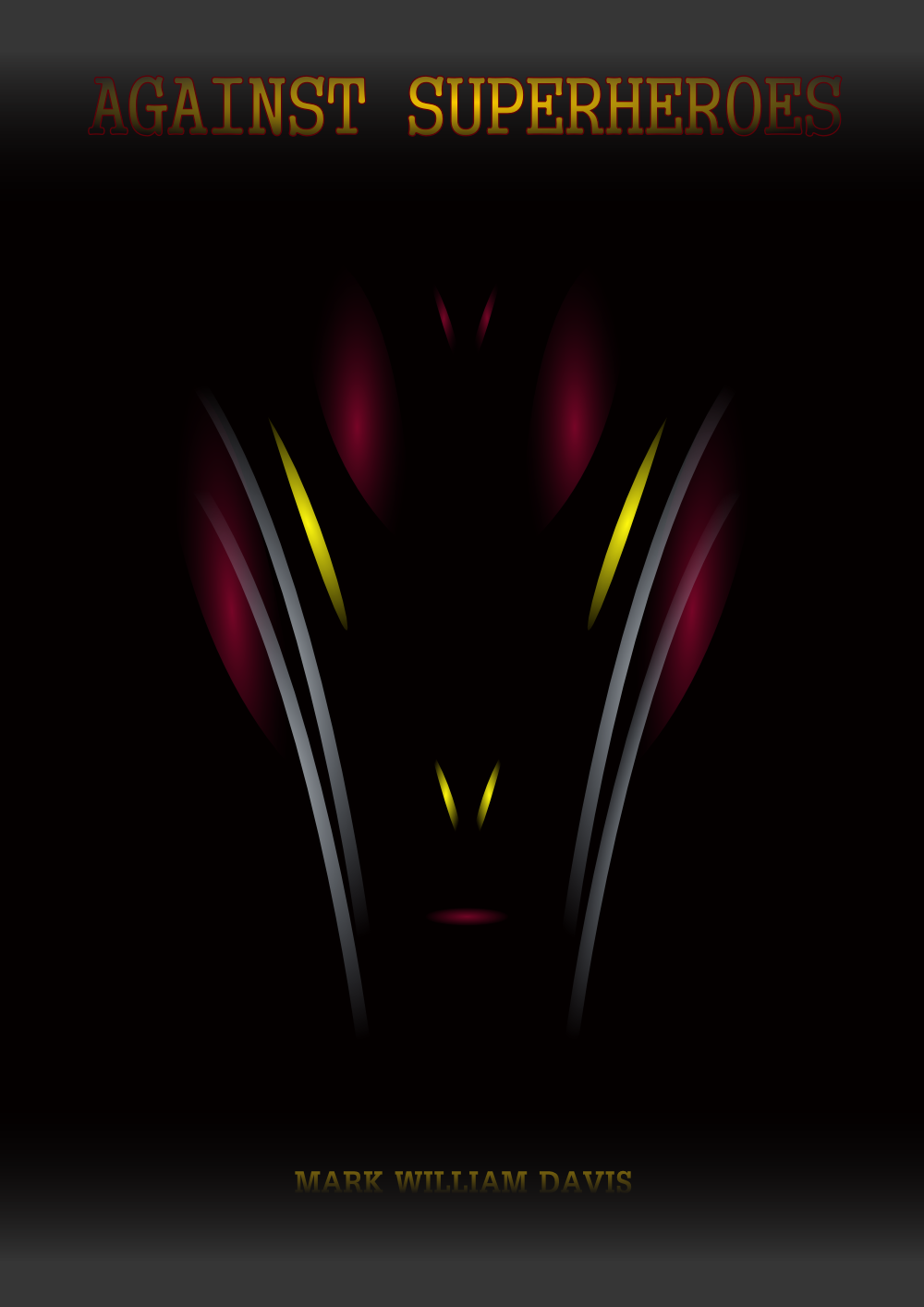
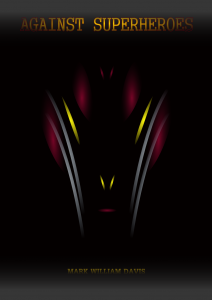
Here are the new cover contenders for Against Superheroes, both of which introduce Ugaritic glyphs to provide a background shade to the Baalic figure who is, of course, against the very notion of superheroes. v7 looks like the leader in this race…

 … Read the rest

Against Superheroes, Chapter 22

Against SuperheroesAs I watched over the Nepalese countryside populated by small hilltop compounds, the irregular terraces of rice paddies reflected the clouds in their muddy mirrors. I had taken on a certain quality of stasis here, frozen above a jungle mountain in an envelope of mist.

I took to trying to mine my memories, to unravel these chains of semantic and temporal associations that reached back through the gray wall of my origins. It was maddeningly difficult, shifting through trapezoids of connections shot through with scientific and technical associations, and with the addition of the perspectives of the people who I had possessed, but I achieved some clarity with diligence and strain. When my mind wandered out to those rice paddies and the tiny shifting figures tending to them, or to the small vans that struggled along the high, sloppy roads, or when the focus moved to the dancing energies of the sky and moisture, I learned to return to this rummaging by counting slowly by threes or by prime numbers, up and down, the necessity of the mental acrobatics pushing the imagery back into a halo around the mathematical gears until they were finally erased, and I returned to the signals of my past.

There I was again, in graduate school, the poetic inflections of the Orphic hymns impressing me until I began writing my own inspired variations, like a composer copying and reordering works by Baroque masters. This theme of divinity, from the Vedas through to the Native American myths, from the Slavic translations to the Babylonian Baals, was always the encompassing and central element of the written and oral traditions.

And all these texts reflected a time when the human mind was only connected to one town, almost always to agriculture, subject to the whims of the seasons and the terror of sickness, and then often forced into violence by the more powerful or by passions that arose without control.… Read the rest
Euhemerus and the Bullshit Artist

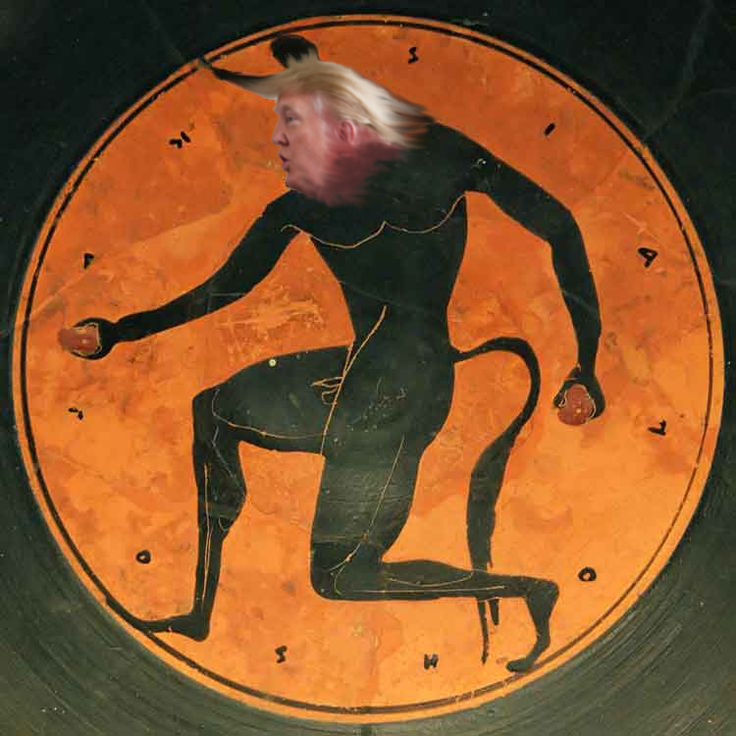
trump-minotaurSailing down through the Middle East, past the monuments of Egypt and the wild African coast, and then on into the Indian Ocean, past Arabia Felix, Euhemerus came upon an island. Maybe he came upon it. Maybe he sailed. He was perhaps—yes, perhaps; who can say?—sailing for Cassander in deconstructing the memory of Alexander the Great. And that island, Panchaea, held a temple of Zeus with a written history of the deeds of men who became the Greek gods.

They were elevated, they became fixed in the freckled amber of ancient history, their deeds escalated into myths and legends. And, likewise, the ancient tribes of the Levant brought their El and Yah-Wah, and Asherah and Baal, and then the Zoroastrians influenced the diaspora in refuge in Babylon, until they returned and had found dualism, elemental good and evil, and then reimagined their origins pantheon down through monolatry and into monotheism. These great men and women were reimagined into something transcendent and, ultimately, barely understandable.

Even the rational Yankee in Twain’s Connecticut Yankee in King Arthur’s Court realizes almost immediately why he would soon rule over the medieval world as he is declared a wild dragon when presented to the court. He waits for someone to point out that he doesn’t resemble a dragon, but the medieval mind does not seem to question the reasonableness of the mythic claims, even in the presence of evidence.

So it goes with the human mind.

And even today we have Fareed Zakaria justifying his use of the term “bullshit artist” for Donald Trump. Trump’s logorrhea is punctuated by so many incomprehensible and contradictory statements that it becomes a mythic whirlwind. He lets slip, now and again, that his method is deliberate:

DT: Therefore, he was the founder of ISIS.

Read the rest