 Xu and Tenebaum, in Word Learning as Bayesian Inference (Psychological Review, 2007), develop a very simple Bayesian model of how children (and even adults) build semantic associations based on accumulated evidence. In short, they find contrastive elimination approaches as well as connectionist methods unable to explain the patterns that are observed. Specifically, the most salient problem with these other methods is that they lack the rapid transition that is seen when three exemplars are presented for a class of objects associated with a word versus one exemplar. Adults and kids (the former even more so) just get word meanings faster than those other models can easily show. Moreover, a space of contending hypotheses that are weighted according to their Bayesian statistics, provides an escape from the all-or-nothing of hypothesis elimination and some of the “soft” commitment properties that connectionist models provide.
The mathematical trick for the rapid transition is rather interesting. They formulate a “size principle” that weights the likelihood of a given hypothesis (this object is most similar to a “feb,” for instance, rather than the many other object sets that are available) according to a scaling that is exponential in the number of exposures. Hence the rapid transition:
Hypotheses with smaller extensions assign greater probability than do larger hypotheses to the same data, and they assign exponentially greater probability as the number of consistent examples increases.
It should be noted that they don’t claim that the psychological or brain machinery implements exactly this algorithm. As is usual in these matters, it is instead likely that whatever machinery is involved, it simply has at least these properties. It may very well be that connectionist architectures can do the same but that existing approaches to connectionism simply don’t do it quite the right way.… Read the rest
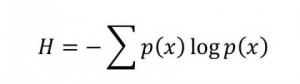 Research can flow into interesting little eddies that cohere into larger circulations that become transformative phase shifts. That happened to me this morning between a morning drive in the Northern California hills and departing for lunch at one of our favorite restaurants in Danville.
 A pervasive commitment to ambiguity. That’s the most compelling sentence I can think of to describe the best epistemological stance concerning the modern world. We have, at best, some fairly well-established local systems that are reliable. We have consistency that may, admittedly, only pertain to some local system that is relatively smooth or has a modicum of support for the most general hypotheses that we can generate.