What We Can’t Know

I’ve been wandering in cities, unlocking the secrets of metros, funiculars, tipping expectations, museums, and ride-sharing services in languages that, despite several years of study, I know will never reveal the finer brocades and stitches of cultural subtleties reserved for the natives. The gestalt that lingers over Portugal and now Barcelona (Malta soon enough) is of palimpsests in crush and stone, accumulated over the centuries in a barely-controlled layering. There is an incompleteness to the spaces where boarded facades in gothic quarter alleyways carry neat signs promising renovations beside “Free Palestine” graffiti arcing imperfectly above the work of an artist with a careful touch. Banksy has imitators and challengers. I blended into a crowd this morning surrounding and cheering a socialist politician demanding support for “pensionistes” due to some meticulous failure of the current regime.

Maybe.

There is all this that I can’t know with any precision. Foggy barriers of time, space, language, culture, and even pulsing jet lag keep me from having the instant recognitions of motives and the occasional capacity to irony and winking humor that I drift along with in American culture.

I travel very light these days (“Eu sou minimalista” as I constructed and then confirmed via Google Translate) with just a 16 liter sling bag. Three shirts, three underwear, three pair socks, one pair pants…Everything in merino wool except the pants, which are in capable technical materials. I have a charger bag and a small toiletries kit. I have my phone and an iPad Pro with keyboard. I do laundry in my bathroom sink every other day or so, rolling clothes in my bath towel and then hanging to dry overnight.

And on those devices I just finished Ian McEwan’s newest novel, What We Can Know, read on planes and trains, at cafe tables, and in the crepuscular uncertainty before I am forced into the night for dinner.… Read the rest

Triangulation Machinery, Poetry, and Politics

I was reading Muriel Rukeyser‘s poetry and marveling at some of the lucid yet novel constructions she employs. I was trying to avoid the grueling work of comparing and contrasting Biden’s speech on the anniversary of January 6th, 2021 with the responses from various Republican defenders of Trump. Both pulled into focus the effect of semantic and pragmatic framing as part of the poetic and political processes, respectively. Sorry, Muriel, I just compared your work to the slow boil of democracy.

Reaching in interlaced gods, animals, and men.
There is no background. The figures hold their peace
In a web of movement. There is no frustration,
Every gesture is taken, everything yields connections.

There is a theory about how language works that I’ve discussed here before. In this theory, from Donald Davidson primarily, the meaning of words and phrases are tied directly to a shared interrogation of what each person is trying to convey. Imagine a child observing a dog and a parent says “dog” and is fairly consistent with that usage across several different breeds that are presented to the child. The child may overuse the word, calling a cat a dog at some point, at which point the parent corrects the child with “cat” and the child proceeds along through this interrogatory process, triangulating in on the meaning of dog versus cat. Triangulation is Davidson’s term, reflecting three parties: two people discussing a thing or idea. In the case of human children, we also know that there are some innate preferences the child will apply during the triangulation process, like preferring “whole object” semantics to atomized ones, and assuming different words mean different things even when applied to the same object: so “canine” and “dog” must refer to the same object in slightly different ways since they are differing words, and indeed they do: dog IS-A canine but not vice-versa.… Read the rest

The Pregnant Machinery of Metaphor

Sylvia Plath has some thoughts about pregnancy in “Metaphors”:

I’m a riddle in nine syllables,
An elephant, a ponderous house,
A melon strolling on two tendrils.
O red fruit, ivory, fine timbers!
This loaf’s big with its yeasty rising.
Money’s new-minted in this fat purse.
I’m a means, a stage, a cow in calf.
I’ve eaten a bag of green apples,
Boarded the train there’s no getting off.

It seems, at first blush, that metaphors have some creative substitutive similarity to the concept they are replacing. We can imagine Plath laboring over this child in nine lines, fitting the pieces together, cutting out syllables like dangling umbilicals, finding each part in a bulging conception, until it was finally born, alive and kicking.

OK, sorry, I’ve gone too far, fallen over a cliff, tumbled down through a ravine, dropped into the foaming sea, where I now bob, like your uncle. Stop that!

Let’s assume that much human creativity occurs through a process of metaphor or analogy making. This certainly seems to be the case in aspects of physics when dealing with difficult to understand new realms of micro- and macroscopic phenomena, as I’ve noted here. Some creative fields claim a similar basis for their work, with poetry being explicit about the hidden or secret meaning of poems. Moreover, I will also suppose that a similar system operates in terms of creating networks of semantics by which we understand the meaning of words and their relationships to phenomena external to us, as well as our own ideas. In other words, semantics are a creative puzzle for us.

What do we know about this system and how can we create abstract machines that implement aspects of it?… Read the rest

Recursive Diktats

Here is an experiment in poetry that is completely self-contained, encoded as a URL using an Ex-Googler’s itty.bitty website that composes HTML or ASCII content into a URL fragment using Lempel-Ziv-Welch (LZW) compression. Building a chain of self-contained references is not for the faint of heart, but basically involves back-tracking from the end. Each compressed HTML fragment is then embedded in the previous stanza, and so forth.

And the topic is, as it must be, language itself.

Here’s the raw, self-contained URL as a link, too:

https://itty.bitty.site/#/?XQAAAAIjBQAAAAAAAAAQDwmIAcJ7S/e0HRDveaJ/CvZuJSlLjEjE1GCJ5j7pW5xk6EiSIVmcubsQXjfOVGIIKFzXDux135EACaYtu/6Wm88vL+l57/7B3r54PHtC+oxIoKzEnDeFuR5WPk+F1tJ+fLgTg7mDFJJu+ndFIKrpSM9Y5RR4z26Yp6fFl1iYbC7x3ISSwr2H164+jV78LRUkR5b/Ze7vjXocXWNezEtToEjqPw2zQBNFZZ5SYia4pnpJjWzhjsatDnKWaFNSbTXlWbAxalkEYCiuNCQXJJd/YYL15JWi1yo0S+qK/DVCJGZKJ63Tjdye2dkscEwM9fto81/n4CrD8QDUuDPUAhQK2qDsTiRACBsW5F56ywr5uKpFBKdsmYhdVhBU/gD6srw9kGyCm0DT90/SsEA/tl+zzKtpS2xYzecZ9Mxj7moub+q8fdQo+WjKkpdi+FYk9IH/csGNSP18JkgNJlYwHSyQ9wwD3AYqmsyh2qMNj31q393baDGyZT2GfmCjJ9KD8bHtcXIQdGldR+60kPLprZvVu4maaPHUwyH7D/vZLnLzdp4DzusDFHSjOCZbzopEOrQJLYR9p+plVGOBtEXkxEVNlskO83kOByhVtD3c2zIrHocT4KL7kIplMSpEyFAW3OS8copbz7sLk2ZJAc/P2VIld9efw/i89RjMWPSKGlC0iKM7lv91OrBG535QqvipYv75C+NZcazVSYWZJiALmJ1oNTGYQE/l1Rbt6nqhX30YWDnrnflGFXAXTGd2WTY6kCCUtXKApyh+Go96ZAN3bnq4zCyH5bddVULMYpuFAUQsvlQo2usjDuzu7iba5gFV6bD+LIBL+L7o6aO+AcHfu38yAPsHJWGyNcmqsCAjqvxCRVPhrRk4HYb9sELoPkLU1/3LTVZyIXY/7ktMmLXX83ad7xxc7Vk3uv8Yw7BGDvL1u04RF6EkcGt77nMA9AnUYil2AK53vZzCT+SecWvhwovB7siCijT2viqsj1q9DqEz5mBLajt7HmwXS+d6w6YLHG7zSsoZn6Vo9pUtNJGriyQ9STYRzBUPBWCnv21YZ4vTQ84+BVCfpbTsegpBISY4zki5p6yF4XVhB7WVkaTFwzGJB/lX2/+ATPJYgZRhMDZeEVCGLfSY2qAk5u1eGCpXhZLS/frlUDYyoeNjnC/YeFsPAIkezdEu2tNi0vtZyCtABMfTF4XvKcT1PcbwzV9oPIq1m6fF+1rA9TrS2iyqXdjZ902RX3v3vz6PCn0xNmuqXbu/vx50++yyRLKnRYb70IT3Y6ID2em/dAHr+s3xZw5GtAqFsbojqjQnuw5TLG1PqEvX4lBeqwbjm+eXBANzFR3BDpOwC8Fpc3tt2qmTA3F2ivePu2QYNrEHkrsHO4kqd0rDCqKSml44R27NQjOaeUMnmkMAE/jjExfoAP466EA=

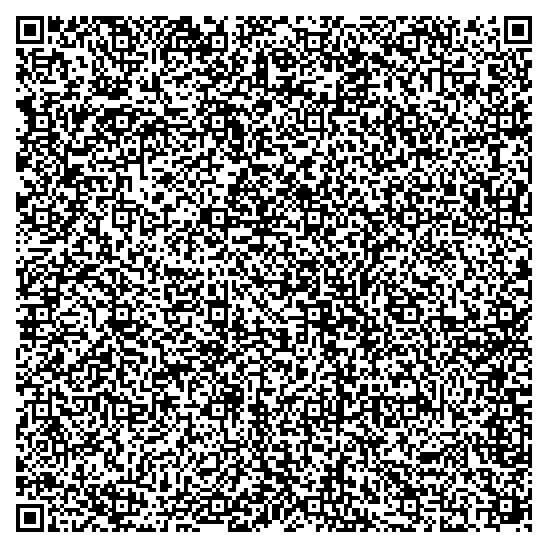
And here is the same as a QR Code:

Read the rest