The Comets of Literary Cohesion

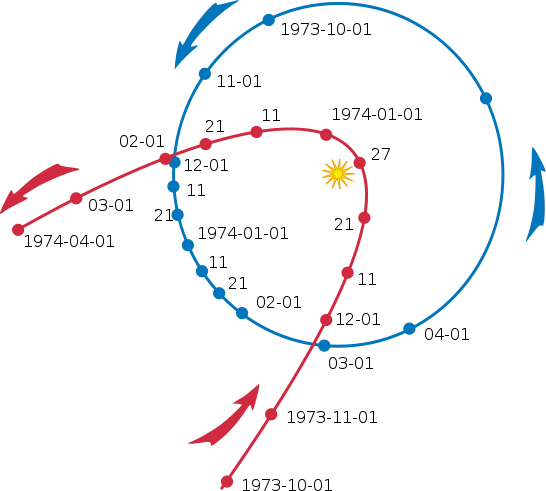
Every few years, with the hyperbolic regularity of Kahoutek’s orbit, I return to B.R. Myers’ 2001 Atlantic essay, A Reader’s Manifesto, where he plays the enfant terrible against the titans of serious literature. With savagery Myers tears out the elliptical heart of Annie Proulx and then beats regular holes in Cormac McCarthy and Don DeLillo in a conscious mockery of the strained repetitiveness of their sentences.

I return to Myers because I currently have four novels in process. I return because I hope to be saved from the delirium of the postmodern novel that wants to be written merely because there is nothing really left to write about, at least not without a self-conscious wink:

But today’s Serious Writers fail even on their own postmodern terms. They urge us to move beyond our old-fashioned preoccupation with content and plot, to focus on form instead—and then they subject us to the least-expressive form, the least-expressive sentences, in the history of the American novel. Time wasted on these books is time that could be spent reading something fun.

Myers’ essay hints at what he sees as good writing, quoting Nabakov, referencing T.S. Eliot, and analyzing the controlled lyricism of Saul Bellow. Evaporating the boundaries between the various “brows” and accepting that action, plot, and invention are acceptable literary conceits also marks Myers’ approach to literary analysis.

It is largely an atheoretic analysis but there is a hint at something more beneath the surface when Myers describes the disdain of European peasants for the transition away from the inscrutable Latin masses and benedictions and into the language of the common man: “Our parson…is a plain honest man… But…he is no Latiner.” Myers counts the fascination with arabesque prose, with labeling it as great even when it lacks content, as derived from the same fascination that gripped the peasants: majesty is inherent in obscurity.… Read the rest
Teleology, Chapter 5

Harry spent most of that summer involved in the Santa Fe Sangre de Cristo Church, first with the church summer camp, then with the youth group. He seemed happy and spent the evenings text messaging with his new friends. I was jealous in a way, but refused to let it show too much. Thursdays he was picked up by the church van and went to watch movies in a recreation center somewhere. I looked out one afternoon as the van arrived and could see Sarah’s bright hair shining through the high back window of the van.

Mom explained that they seemed to be evangelical, meaning that they liked to bring as many new worshippers into the religion as possible through outreach and activities. Harry didn’t talk much about his experiences. He was too much in the thick of things to be concerned with my opinions, I think, and snide comments were brushed aside with a beaming smile and a wave. “You just don’t understand,” Harry would dismissively tell me.

I was reading so much that Mom would often demand that I get out of the house on weekend evenings after she had encountered me splayed on the couch straight through lunch and into the shifting evening sunlight passing through the high windows of our thick-walled adobe. I would walk then, often for hours, snaking up the arroyos towards the mountains, then wend my way back down, traipsing through the thick sand until it was past dinner time.

It was during this time period that I read cyberpunk authors and became intrigued with the idea that someday, one day, perhaps computing machines would “wake up” and start to think on their own.… Read the rest

Signals and Noise: Chapter 7 (Parsimony)

Monotony is the essential character of those late nights, so familiar to Zach and all his fellows. Monotony, but restful and calm, withholding the sharp edges and the intaglios of faces that define everyday interactions, while still remaining a part of the web of life. He could send an AetherNote or email and get a response, but without the complexities of the face had he been talking to the person. There were gigabytes of missed nuance, pursing lips, pauses, dilating pupils, flush responses—all lost behind the veil of electronica. Moreover, he could pause for that brief moment without any awkwardness, and they could pause as well, waiting for the ideas to filter out of the calamity of neural collisions. When everyone can order thoughts a hair faster than ever before in history, yet still interact deep into the night like they were sitting at a pub or around a campfire, there is an acceleration of competitiveness, a capacity for intellectual posturing. The new assholes, the new religionists, the new atheists, the new technologists, the strident politicos, the snarky personalities—everyone primps and props their online identities behind this veil of witty pretense, hearts racing as they snap at the refresh icon, waiting for the cannonball retort.

Democratizing it is, but with the side effect of drowning out the instant, unfiltered and emotive response on the one hand, and the dramatically conditioned and elaboratively intellectualized riposte on the other. There was too much lag for spontaneity and too little for detailed flourish. It is a channel that emphasizes bluster and bombast in securely short constructs. And thought followed suit. Thought on the average got better, but the best thought was drowned out by the long tails of opinions washing through them like the wake of a whale.… Read the rest

Signals and Noise, Start of Chapter 17 (Cannibalism)

The fear of cannibalism is encoded in the recesses of the Greek mind. It was an observational archetype that lent nothing to Zach’s understanding of Homeric epics, but Harrington was insisting on the significance of eating people as a placeholder for the antiquarian origins of the Greek culture. He briefly considered questioning the teacher deeply and humorously as to how exactly they ate people. Did they begin with the heads and brains like the Pacific Islanders? Or maybe they preferred the soft parts first like eyes and genitals, following the predatory predilections of dogs, cats, and wolves? The difference between the animal and the human condition was the difference between survival and a ritualistic misunderstanding of the origins of power, and Harrington’s lecture was conveying nothing about whether that distinction was at play. He just wanted to shock a little bit, to tantalize the minds of his charges with incongruities that might provoke them into learning. Zach thought about raising his hand and asking if cannibalism would be on the test.

The dazing effect of irrelevant information had consequences, but Zach knew his peers well enough to understand that there was nothing that could truly provoke them short of blatant sexuality or gratuitous violence. The former worked on everyone, but the latter had a negative counter-effect on all but those predisposed to voyeuristic fascination with the horrors that the human mind was capable of. The only solution was to teach with porn, Zach thought, imagining vignettes with Helen of Troy servicing shiploads of sailors in gratitude for her safe delivery to the walls of the great, impenetrable city. Impenetrable until the protection tore just a little and the famous sneak attack carried the wiggling penetrators in to finally sodomize the city into submission.… Read the rest

Poetry and Imprecision

But what if the written word is not identifiably personal or about human relations? What if the ideas expressed in the texts don’t bind to any kind of honest analysis of the facts? What if the semantics are so diffuse that they are open to almost any interpretation?

Then we have poetry.

On the Bay Area’s KQED Forum, Elaine Pagels talks about the Book of Revelation and her new book, its influence, misinterpretation, reinterpretation, and the scholarship that surrounds it.

Poetry is hidden and mystical. This makes it great in inspiring interpretation but also great in the breadth of the imaginable interpretations. Imprecision can inspire monumental achievements and horrific human tragedies–likely in about the same proportions. Luckily, we now have the power to parody and deconstruct it all without fear and with the building knowledge that through that deconstruction we can better account for an understanding of the humanity of others.… Read the rest

Fiction and Empathy

The New York Times reviews the neuroscience associated with reading fictional accounts, concluding that the brain states of readers show similar activation patterns to people experiencing the events described in the book. This, in turn, enhances and improves our own “theory of mind” about others when we read about social interactions:

[I]ndividuals who frequently read fiction seem to be better able to understand other people, empathize with them and see the world from their perspective. This relationship persisted even after the researchers accounted for the possibility that more empathetic individuals might prefer reading novels.

Steven Pinker’s The Better Angels of Our Nature suggests that the advent of the printing press is where we see the start of a shift in European societies’ attitudes about violence. The spread of reading and the growth of political satire correlate with reductions in state violence through the 19th Century and into the 20th (yes, he argues the 20th shows a reduction in violence, despite our intuitions about WWI and WWII). Think Voltaire. Think All Quiet on the Western Front.… Read the rest

Teleology, Chapter 26

Wherein, the protagonist, Mikey, his twin brother, Harry, and a journalist, Jacob, are being physically healed by intelligent nanomachines while their consciousnesses are in a virtual world that appears to be a research ship in the Pacific Ocean.

26

We hovered in our “matrix” of sorts for ten more days. The Lexis reported that the search by US military forces was intensifying. Swarms of unmanned underwater and airborne vehicles were scouring the sea, though the most intense efforts were concentrated several hundred kilometers from our new location. The Lexis believed that the platform was in jeopardy because of the new connectivity that they had achieved to the outside world through the control of the nanobots, but also seemed consigned to whatever fate I dictated concerning their disposition. I chose to wait because our medical conditions were improving day by day—at least according to them—and I saw no reason to emerge until maximally healed.

We relaxed aboard the Recherché in the meantime, eating Cottard’s increasingly elaborate cooking and drinking his exceptional wines. The wines and foods were all familiar to me, I realized; the sensations had been mined from our thoughts and recollections. There was something disturbing about that, though I didn’t feel particularly violated because the Lexis were both a familiar quantity to me and their motivations I suspected were not malevolent.

While waiting I worked with the Lexis to try to understand how they had taken command of the external nanomachines and how they had modified them to improve their functionality. They regarded the entire exercise as something like the Sistine Chapel ceiling. It was an elaborate artistic effort designed to promote the idea of the Creator among their kind by showing my adventures in an almost unimaginable heaven that they saw us living in.… Read the rest

Signals and Noise: Chapter 13 (Cygnus atratus)

Sometimes, when Zach had too much coffee, when he had sneaked a smoke on the back porch that projects out over the weedy ground and right up to the back wall, beyond which is the alley and driveway of an apartment complex in drab rose and orange, sometimes he would lie awake until there was a subtle shift in his sensibilities that was almost like a buzz encompassing him, and he would go on thinking about the events of the day even as he drifted off to sleep and then awoke again, minutes later, and was still thinking about them, like an unbroken chain of reasoning that suffered a momentary dip. But there was always a specter hanging in the facts and the faces and the ideas, like an irrational interloper. Only a fever ever reproduced anything like those moments—like that specter—only a fever could twist ideas over themselves into the impossible and weird motifs that were a merger of sleep and waking fantasies. Zach would rouse in those moments or sometimes bolt upright while trying to reclaim the ideas and force them into a coherent whole, but then, when the pieces had regained their permanence and the puzzle was reunited and showed, once again, the rational and calm artwork on the box of everyday reality, Zach would find himself longing for that alternative state, for the confusion that he struggled to subdue in the hypnagogic fog. It was not just curiosity, he realized, but a sense that there was a constructive event surfacing out of his unconscious self—an event that was using his memories for some special purpose.

There was an ameliorative effect to the anxieties of the day that crept in at those moments, like a sieve had strained all the complexity out of the bursts of nervous arousal, and he would lean back again into the hollow of his down pillow that smelled like his hair, tinged by his shampoo, and turn his face into the dome, sliding his cheek against the silky weave of the pillowcase, finally thinking that sleep would arrive soon.… Read the rest

Signals and Noise: Chapter 9 (Trance: beginnings)

States of consciousness satisfy wildly different conceptions with equanimity. Here we have epiphenomenalism, where the feeling, the self, the I, are all freeloaders on some deeper commingling of logical prescriptions and mathematical calculations. We can stop right here, though, and track about in the cathedral of those subjective essences, reveling in each distorted recollection and episodic fumbling, worried that we are deflating the heart of the matter, the emotional character, draining out the seed that is essentially who we are. With time hanging like this—stopped, frozen—the propositions and their statistical basis functors start to rise into clarity, and the ripples of their influence trickle into sensibility. I did in fact do that, say that, because it did in fact make sense. I am aware of that now and the blip of clarity, momentary as it was, reflects that underlying matrix of contending feelings, driving hopes, and social posturing.

But here we have dualism, reflecting every folk psychological wire in our hypothetical soul. We are distinct and apart from our bodies, like parasites hitching a ride, implanted by some god or first principle back behind our brow ridge. Oh, yes, we are subjects of the body and brain, but we are also their master. We command, they obey, at least until they buck and collapse under duress, laziness, and pain. The signals come back in and there is not enough will, despite our separation behind the bunkered walls of gauges. There is not enough will, somehow, to push a bit further, because we are in fact the fatigue, the pain, the boredom. We realize this at those passing moments when we are at the limit and the structures seem too porous for there to be any reason to the proposition.… Read the rest

AntiTerran Metatextuality

Intertextuality is a loaded word. It covers allusion and parody and reference. For some authors, it is the motivation to write, from Umberto Eco’s semiotic indulgences to Nabokov’s vast, layered palimpsest in Ada. I create deliberate allusions to Genesis in Teleology and references to Nabokov’s Ada in Signals and Noise.

The opposite of intertextuality might be centrality or concreteness, but it might also be the extension of the literature or artwork as references in other works that extend or reimagine the original work, creating a literary chain of sorts. Your intertextual references are referenced by my metatextual extensions.  Outertextuality? Whatever the term, we get a kind of referential landscape like a network that builds on an artificial landscape, the lives of imagined characters, and the universe of ideas that they inhabit.

Dieter Zimmer, who appears to have done the German translation of Ada, has a brilliant example of metatextuality in his Geography of AntiTerra. With methodical precision, he translates the textual descriptions into a map of the imagined world–a kind of fan cartography that solidifies the strange geography into a complete realization. I’m reminded of the Elven dictionaries in The Silmarillion or the detailed online fan fiction from adoring readers of current bestsellers.

I think there is likely a strong connection between the psychology of religious belief and the same motivators towards metatextuality. Imagined worlds are always interesting and plotted. Even when characters are harmed or injured, we feel only fleeting sensitivity to the idea of their injury. Moreover, the intertextuality is a network of coherence-supplying support for the narrative’s epistemology. The more detail, the greater sense of clarity of the imagined world, and the more buy in as to the reality of mysteries described therein.… Read the rest